
The Huddle — Money Grab
The Youth Sports Companion Guide.
Table of Contents
Tap any section to jump. Your place can be bookmarked from the top bar.
Cover
Money Grab
Masthead
Sponsor Highlight


The Framing
Expectation accelerating faster than the work.
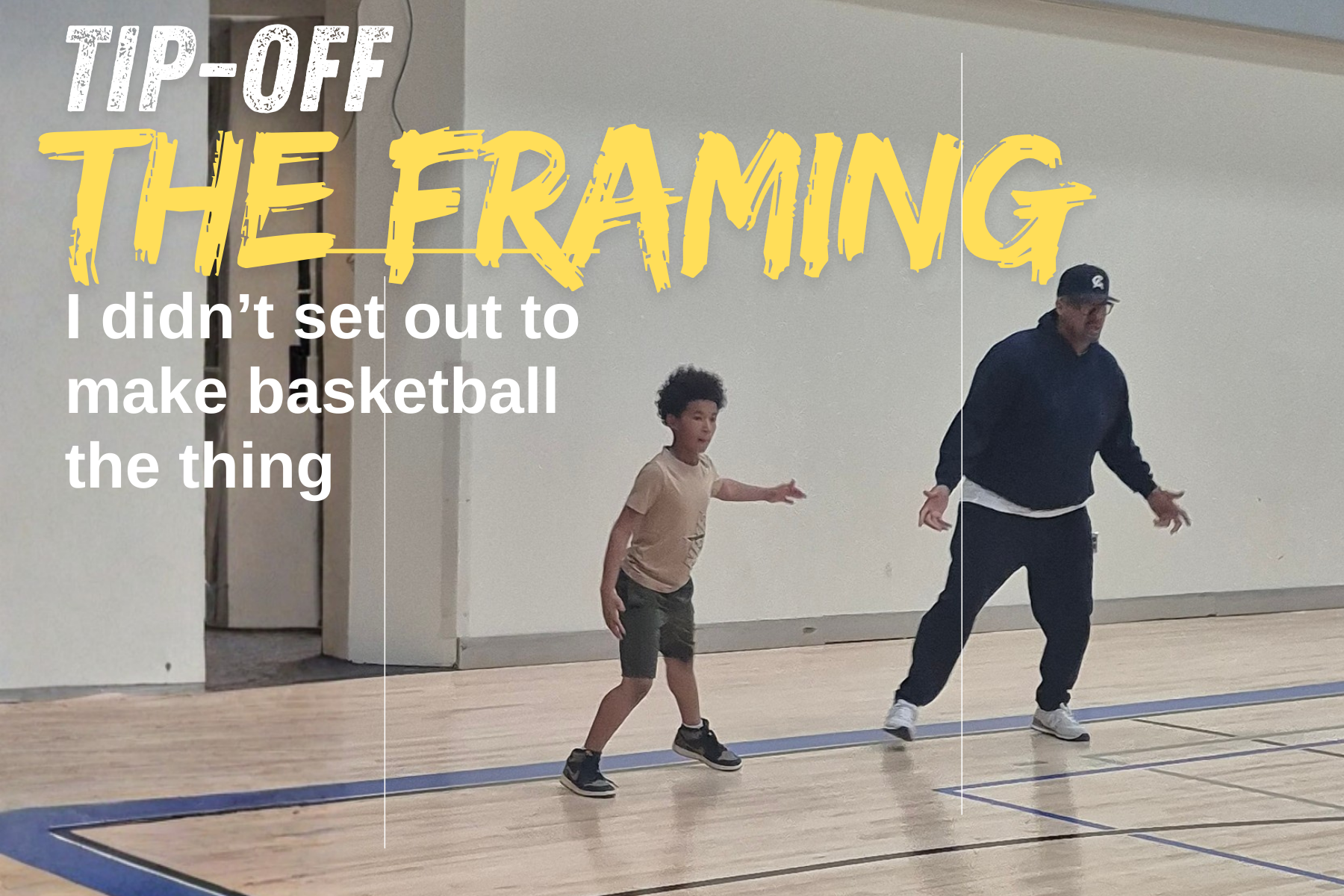
I didn’t set out to make basketball the thing.
My son has played softball. Baseball. Football. Boxing.
When he got a taste of basketball, though, I stopped hearing about the others.
Not because I pushed it. Because he did.
So I bought a little goal for the backyard. He outgrew it.
I put him in a basic skills and drills program for about a year. Eventually he said, “I want to actually play.”
That felt reasonable. That felt sequenced.
In between YMCA visits, I’d see trainers advertising sessions for $50 an hour. I’m not against trainers. I’m not against investment. But at his level, at that stage, that price didn’t make sense to me.
It wasn’t about affordability. It was about order.
So we joined a church league. That’s when he began to shine.
I ended up coaching one of the teams. I taped the games. We’d watch them that night or the next day. I’d point out what I saw. Then we’d go back to the Y and work on that. I didn’t grow up playing basketball like that, so most of what I was learning, I was learning in real time.
By the end of the season, the growth was obvious.
And that’s where March lives. Because once growth shows up, expectation follows.
Now what’s next? The next league is this summer.
We still go to the Y two or three times a week. He finds other kids there and works on what he’s been practicing.
His next major milestone is sixth grade — when he can try out for his school team. He’s in fourth now. That’s two years away.
And now the questions start circling. Do I get a trainer now? Do I sign him up for AAU? Is two years too long to “just practice”?
And now, because he wants to play, he’s talking about soccer. Is that restlessness? Is it real interest? Is it just momentum looking for somewhere to go?
This is where the distortion happens.
Not in greed. Not in bad programs. Not in bad parents. In sequencing.
The core problem in youth sports isn’t spending. It’s expectation accelerating faster than corresponding work.
When a child shows growth, it’s easy to assume the next step must be bigger. When effort compounds, we feel pressure to match it with intensity. Financial intensity starts scaling with excitement instead of readiness.
Exposure before foundation. Intensity before stability. Professionalization before repetition has fully compounded.
The system isn’t evil. It’s built for motion. Deadlines, tiers, limited spots — it all runs on forward momentum. The machine doesn’t know your child’s timeline. It only knows its own.
And when you combine that external speed with internal pride — with visible growth — spending can start to feel like responsibility.
But growth doesn’t automatically demand escalation. Expectation without corresponding work — that’s the real money grab. Not because someone is tricking you. Because the sequence gets inverted.
Effort should be constant. Financial intensity should scale with clarity. That’s the lens March requires.
The question isn’t “Should I invest?”
The question is: Has the work reached the point where this investment actually compounds — or am I accelerating the calendar because progress feels good?
This issue isn’t about rejecting ambition. It’s about protecting order.
Because when investment follows sequence, confidence builds naturally.
When sequence is skipped, cost increases — and clarity disappears.
And in a system built around movement, clarity is the only real advantage.

JAMES’S JOURNEY
(Under the Scaled Investment Model Lens)

James didn’t start with a plan. He started with a ball.
At first it was casual. Driveway shots. Misses that hit the garage. A few made baskets that felt bigger than they were. No schedule. No evaluation. Just access and repetition.
He didn’t talk about teams yet. He talked about trying again.
Over time, the repetition became consistent. He asked to go to the gym. He stayed longer than he used to. The ball stopped feeling foreign. It started feeling familiar.
That’s when something shifts for most families.
Growth shows up. And growth creates expectation. The next question usually isn’t, “Has the foundation stabilized?” It’s, “What’s the next level?”
James joined a local league. Nothing elite. No travel. Just organized games and referees and standings. The first few weeks were uneven. He moved fast when he needed to slow down. He forced passes. He forgot spacing. But he also began to see patterns.
After games, he wanted to talk about what happened. Sometimes the conversation stayed in the car. Sometimes it carried into the next practice. Sometimes it showed up at the gym a few days later when he tried something different. That’s how correction loops begin. Not because someone announces them — but because repetition starts connecting to awareness.
By mid-season, James looked different. Not dominant. Not elite. Just steadier. Movements repeated more consistently. Mistakes reduced in frequency. Effort didn’t spike and disappear — it held. That’s when the pressure returned.
Other teams were traveling. Some kids were joining select programs. Parents talked about exposure. Summer circuits. Limited spots.
The question shifted from, “Is he improving?” to, “Is this enough?” That’s where sequencing quietly gets tested.
It’s easy to assume that visible growth demands immediate escalation. That stability requires intensity. That participation must scale quickly to protect progress.
But growth doesn’t automatically signal readiness for load. James was still building repetition. Still stabilizing mechanics. Still learning how to self-correct without prompting. The work was compounding — but it wasn’t finished.
The calendar, however, doesn’t measure stabilization. It measures seasons.
When the league ended, the gym felt quieter. The games stopped. Momentum felt fragile. The thought crept in: Should he add more? Should we introduce something bigger? Should we accelerate before the gap slows him down?
This is where expectation can outrun work. Not because ambition is wrong. Because motion feels productive.
But repetition is quiet. Stabilization is invisible. Foundation rarely looks urgent.
James kept playing. Open runs at the Y. Pick-up games with kids he’d just met. Shooting sessions that weren’t announced to anyone. Some days were sharp. Some days weren’t. But the baseline held.
The temptation to escalate didn’t disappear. It rarely does. It just became easier to evaluate. Was he ready for exposure — or still refining foundation?
That’s the question most families face. Not whether to invest. But whether the investment matches the sequence.
James isn’t a prodigy. He isn’t behind. He’s just in process. And process doesn’t always need acceleration. Sometimes it needs time.
The Mechanism Behind Acceleration
How progression quietly turns into pressure.
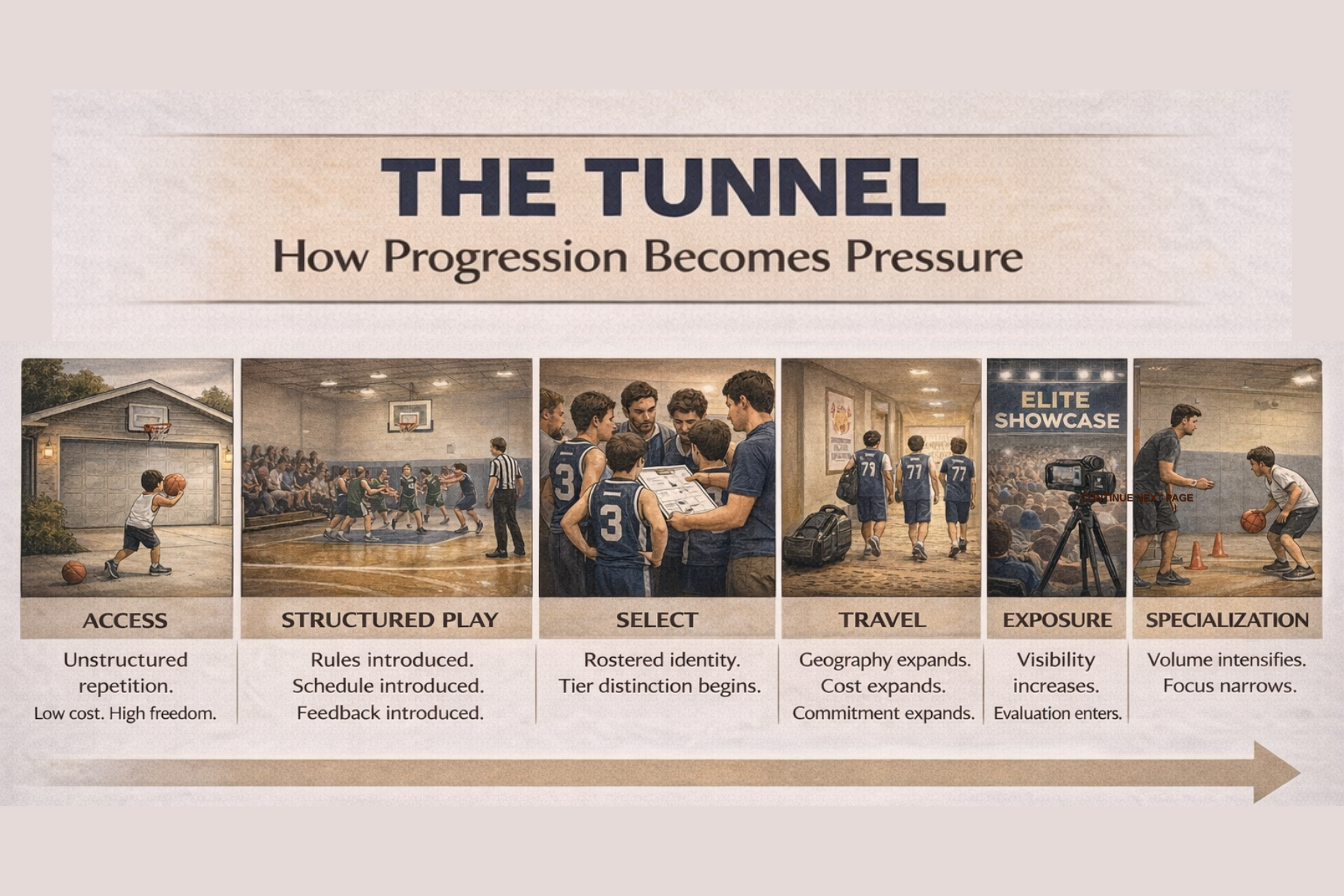
Most families don’t wake up trying to overspend. They move step by step.
The distortion doesn’t happen in a single decision. It happens in progression.
Youth sports operate on a tiered model. Not maliciously. Structurally.
Access leads to structured play. Structured play leads to select teams. Select teams lead to travel. Travel leads to exposure. Exposure leads to specialization.
Each step feels incremental. Each step feels justified. The problem isn’t that these tiers exist. It’s that the system is built to encourage upward movement — continuously.
Revenue in youth sports is not primarily tied to outcomes. It’s tied to participation at higher levels. Leagues need teams. Teams need rosters. Tournaments need entries. Trainers need clients. Facilities need bookings. Stability in the system depends on forward motion.
When a family remains at one tier for too long, they aren’t wrong — but they aren’t scaling. And the structure is optimized for scaling. This is why the language intensifies in March:
- Limited spots.
- Last chance.
- Elite roster forming.
- Tryout window closing.
Deadlines create compression. Compression accelerates decision-making. Acceleration increases commitment. Not because the athlete is ready. Because the calendar is moving.
The most subtle mechanism in this model is what looks like opportunity.
“Your child has potential.”
“We think they’re ready for more.”
“This is the next level.”
These statements are not inherently manipulative. They are part of a growth culture. But growth culture, combined with tiered economics, creates a powerful sequence:
Visible improvement → Increased expectation → Increased financial intensity.
What often gets skipped in that sequence is stabilization. Repetition does not generate urgency. Correction loops do not generate revenue. Foundation work does not create headlines. Exposure does. Travel does. Elite branding does.
And because exposure is visible, it feels developmental. But exposure does not create readiness. Readiness creates value from exposure. This is where mis-sequencing quietly happens.
Families introduce competitive load before mechanics stabilize. They introduce private instruction before self-correction is present. They increase volume before movement efficiency holds.
From the outside, this looks ambitious. From the inside, it often feels responsible.
No parent wants to be the one who “held their child back.”
The system doesn’t need to pressure you directly. It only needs to normalize upward motion.
The tunnel works like this: Each level appears to be a natural continuation of the previous one. But continuation is not the same as readiness.
The structure rewards acceleration. Development rewards sequence. Those two rhythms are not always aligned. And March is when they collide.
The goal is not to exit the tunnel. It’s to recognize where you are inside it. Because once you see the progression model clearly, you can choose your pace — instead of inheriting it.

COVER STORY
The Data of Development
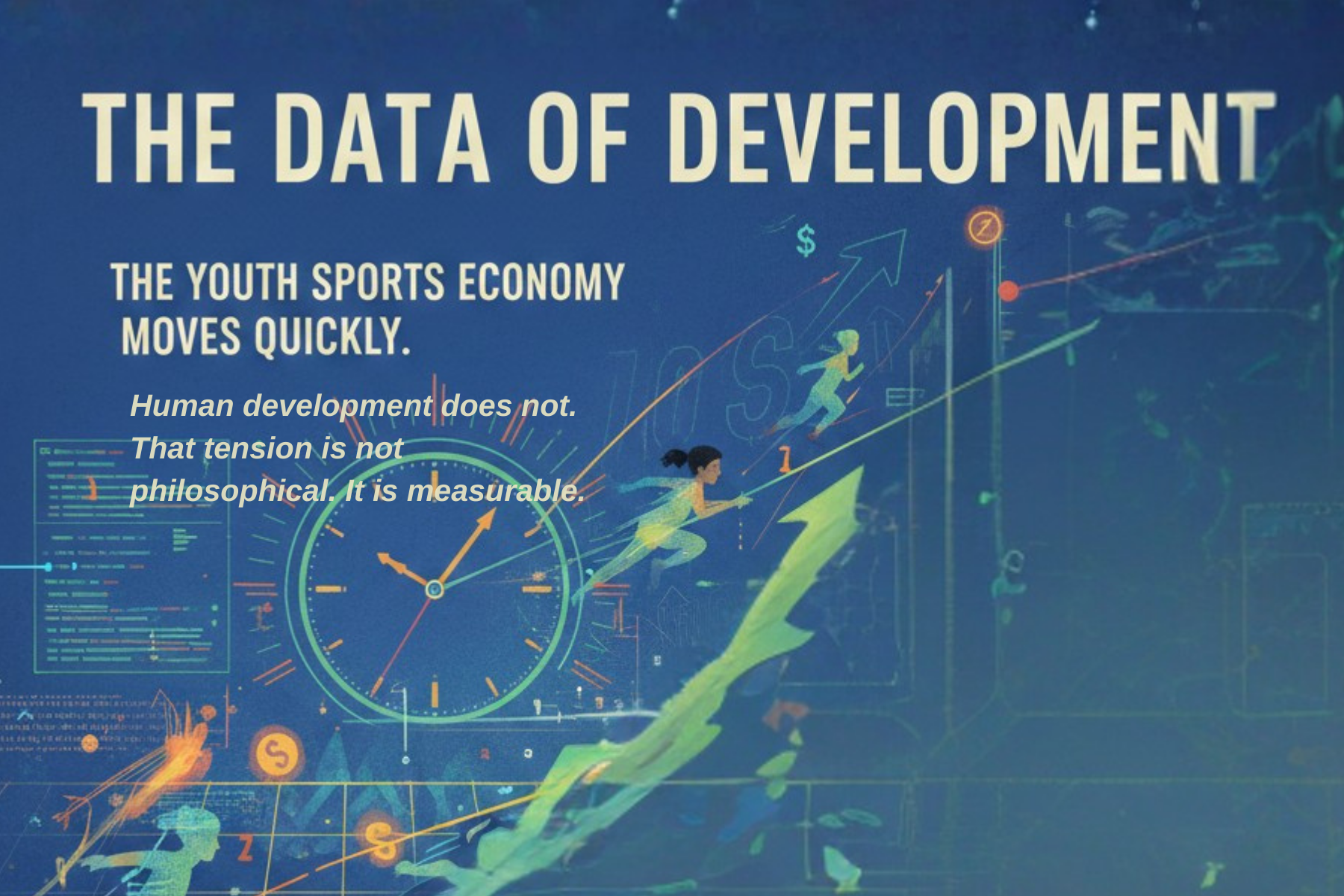
The youth sports economy moves quickly. Human development does not. That tension is not philosophical. It is measurable.
Over the last two decades, sports medicine researchers and developmental scientists have studied early specialization, training volume, injury rates, and long-term athletic outcomes. The findings are consistent across sports. Acceleration does not reliably predict elite outcomes. In many cases, it increases risk.
Specialization and Injury Risk (Established Research)
Multiple longitudinal studies have found that athletes who specialize in a single sport at an early age experience higher rates of overuse injury than those who diversify.
The American Academy of Pediatrics and the American Orthopaedic Society for Sports Medicine both caution against early specialization prior to adolescence in most sports.
Why?
Because repetition without recovery increases mechanical stress before the body has stabilized movement patterns and growth plates. The risk is not dramatic failure. It is cumulative load.
When volume scales faster than biological readiness, injury rates increase. The body does not respond to ambition. It responds to stress.
Burnout and Dropout
Research on youth athlete attrition shows that burnout correlates more strongly with intensity and pressure than with participation itself. Children who report high enjoyment and moderate structure stay in sports longer. Children who report chronic pressure, year-round demands, and limited autonomy are more likely to disengage during adolescence.
Burnout is rarely sudden. It is progressive fatigue — physical and psychological. And it often appears in athletes who were once labeled “ahead.”
The Myth of the Early Indicator
Parents often fear that delaying escalation will close opportunity windows. Data does not strongly support that fear. Studies examining elite and professional athletes consistently show wide variability in early training pathways. Many high-level athletes did not specialize early. Many participated in multiple sports. Many did not enter high-intensity circuits until mid-adolescence.
Early acceleration does not reliably distinguish elite outcomes. It may create visibility. But visibility is not the same as long-term ceiling. The developmental curve of a 10-year-old is not predictive in the way marketing language implies.
Volume vs Quality (Pattern Analysis)
Increased volume is often mistaken for increased development. But research on skill acquisition emphasizes deliberate practice — structured repetition with feedback — not simply higher hours logged.
More tournaments do not equal more refinement. More exposure does not equal more correction. Skill stabilizes through targeted repetition, not calendar density.
The Growth Plate Reality
Pediatric orthopedists have documented increased rates of stress fractures, tendon injuries, and overuse conditions in athletes who engage in high-volume, single-sport participation year-round.
Children are not scaled-down adults. Their skeletal systems are still developing. Training intensity that appears manageable externally may exceed internal tolerance thresholds. The body adapts to load gradually. It does not adapt on demand.
The Exception Bias
Every community can point to the outlier: The early standout. The viral highlight clip. The child who seems ahead of schedule.
But outliers are not models. They are exceptions.
Policy built around exceptions produces distortion. Development built around stabilization produces durability. Ambition is not the issue. Mis-sequenced intensity is.
What the Data Actually Suggests
It does not say: Do less. It says: Sequence better.
Increase intensity when:
- Mechanics stabilize under fatigue.
- Recovery is adequate.
- Motivation remains intrinsic.
- Performance baseline is consistent.
Scale investment with readiness — not with visibility. That is not conservative. It is aligned with evidence.
March Translation
When tryouts open and “limited spots” language appears, the calendar suggests urgency. The body and brain operate on adaptation curves, not registration windows. The mismatch between those timelines is where overspending — and overloading — often begins.
The data does not argue against progression. It argues against premature escalation.
Closing Anchor
The goal is not to protect children from ambition. It is to protect ambition from being exhausted too early.
Effort should remain constant. Financial and competitive intensity should scale with clarity. The research supports that order.
CREDIBILITY FRAME
This analysis is not an indictment of ambition, nor a critique of individual coaches, trainers, or programs. It is a structural review grounded in established child development research, sports medicine data, and the observable economic patterns of youth sports systems.
Every level of youth sports contains people working hard and acting in good faith. The progression model exists because families seek growth, competition, and opportunity. That desire is not the problem.
The distortion occurs when sequencing becomes automatic instead of intentional — when financial and competitive intensity scale with calendar momentum rather than developmental clarity.
Our aim is not to reduce participation. It is to restore order.
Evidence does not argue against ambition. It argues for alignment — aligning load with readiness, intensity with stability, and investment with sequence.
When that alignment exists, ambition strengthens. When it does not, pressure compounds.

GAME PLAN
Strategic Restraint — Restraint is often mistaken for hesitation.
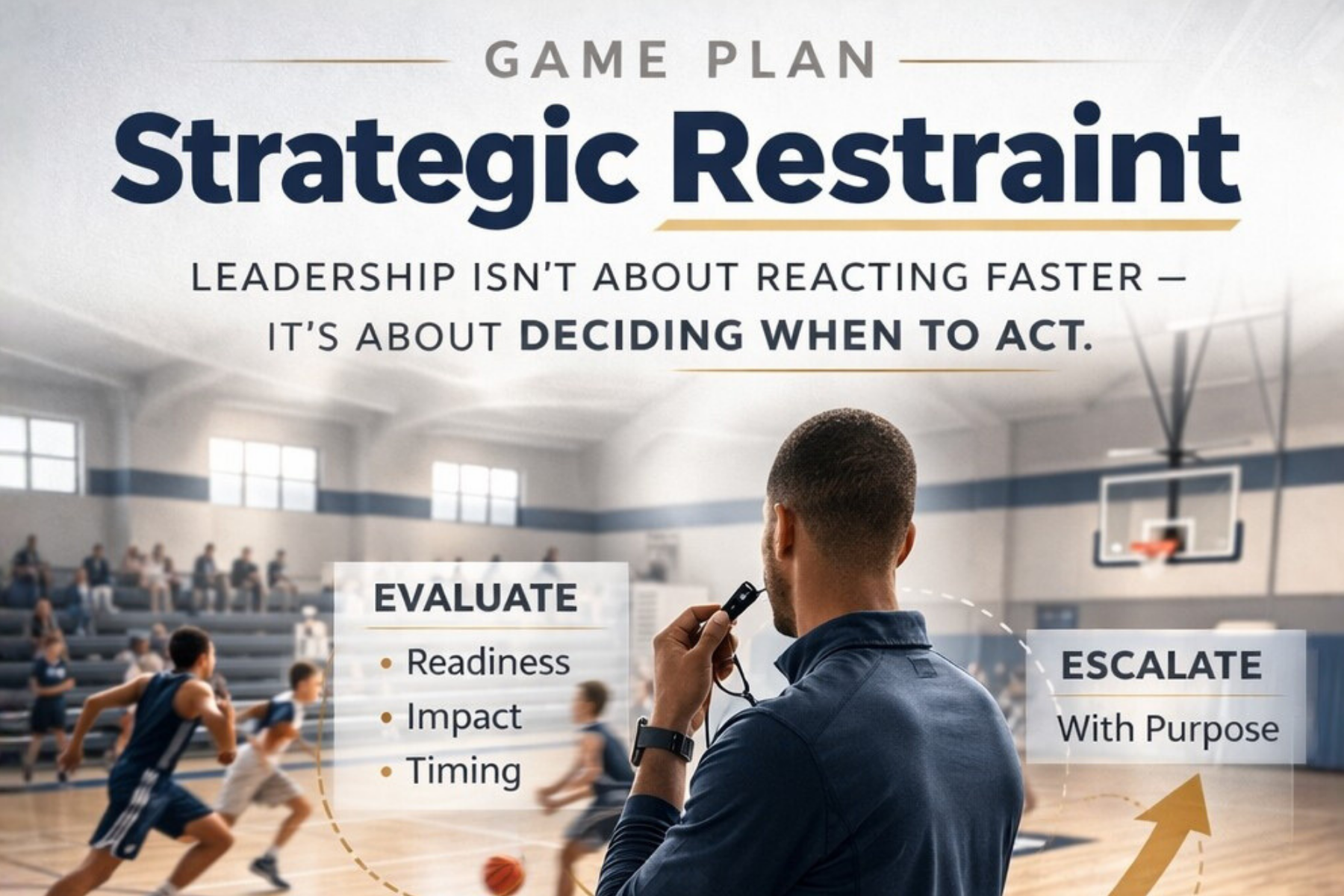
Restraint is often mistaken for hesitation.
In youth sports, hesitation feels risky. Windows close. Rosters fill. Seasons advance.
But restraint, when intentional, is not delay. It is design.
The difference between stagnation and sequencing is clarity.
Separate Opportunity from Obligation
Opportunity says: Your child has access. Obligation says: If you don’t act now, you fall behind. Those are not the same message.
An invitation to compete is not a mandate to escalate. A tryout is not a verdict. A select roster spot is not a developmental deadline. When those lines blur, spending begins to feel like protection.
The goal is not to reject opportunity. The goal is to ask whether the opportunity matches the stage.
Define the Work Before the Upgrade
Before increasing financial intensity, ask: Has the current level been maximized? Not explored. Not sampled. Maximized.
Is repetition still producing correction? Is performance stabilizing under fatigue? Is effort self-directed without reminders? If the answer is still forming, the next tier may be premature. Escalation should compound work — not replace it.
Use the 30-Day Rule
Acceleration thrives in compressed timelines. Restraint creates space.
When a new level is introduced — a trainer, a team, a circuit — wait 30 days before committing financially. Not to stall. To observe.
Does motivation hold? Does repetition continue without external pressure? Does interest remain stable beyond excitement?
Urgency weakens when exposed to time. Readiness does not.
Protect the Quiet Work
Repetition is invisible. Correction loops are unannounced. Stabilization does not trend. But this is where development compounds.
If structured exposure replaces repetition too early, the athlete becomes busy — not better. Strategic restraint protects the quiet work from being interrupted by visible intensity.
Increase Intensity in Proportion to Stability
Intensity should not be calendar-driven. It should be stability-driven.
Increase competitive load when:
- Mechanics hold under pressure.
- Emotional regulation is consistent.
- Recovery is adequate.
- Intrinsic motivation persists.
If those signals are inconsistent, remain at the current tier. Not out of fear. Out of alignment.
Restraint Is Not Reduction
This is not about doing less. It is about sequencing better. Effort remains constant. Work remains steady. Practice continues.
Restraint simply ensures that financial and competitive intensity scale at the same rate as developmental clarity.
March Translation
When registration windows tighten, the question is not: Should we participate? It is: Is this the right level — right now?
Participation without sequencing feels productive. Participation aligned with readiness builds durability.
Strategic restraint is not a defensive posture. It is a confident one. Because in systems optimized for speed, clarity is the only real advantage.
HALFTIME
The Horizon Invitation — March compresses time.
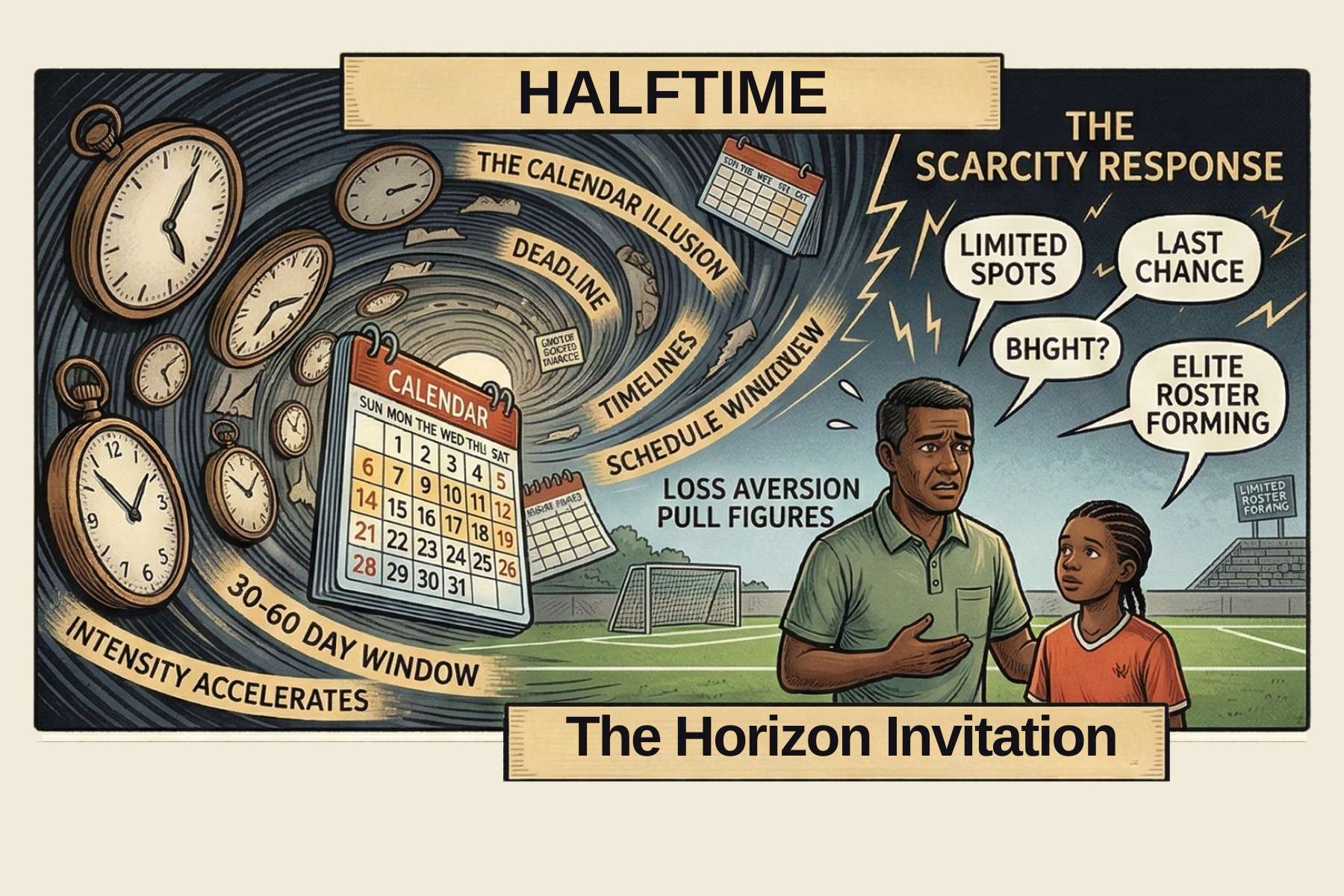
Deadlines cluster. Tryouts overlap. Language tightens. Conversations shift from “if” to “now.”
Even when no one is pressuring you directly, the atmosphere changes. And pressure rarely feels loud. It feels responsible. It feels like staying ready. It feels like protecting momentum.
That’s why this section exists. Not to interrupt ambition. To regulate it.
The Calendar Illusion
Most youth sports decisions are made inside a 30–60 day window. But most athletic development unfolds across 5–10 years.
When short-term deadlines dominate long-term vision, intensity accelerates. The brain responds to urgency with action. The body responds to development with repetition. Those timelines do not move at the same speed.
Halftime is where you zoom out.
The Five-Year Lens
Picture your child five years from now. Not next season. Not next tryout. Five years.
Do you want: A résumé full of early exposure? Or a body and mindset built to sustain effort?
When viewed through a five-year lens, many urgent decisions soften. Not because they are wrong. Because they are smaller than they first appeared.
The Scarcity Response
Scarcity language triggers action. Limited spots. Last chance. Elite roster forming. These phrases activate loss aversion — the instinct to avoid missing out. It is a normal response. But missing one opportunity does not eliminate development. It often clarifies it.
There will be more teams. More leagues. More seasons. There will not be another foundation-building year at age ten.
Time is renewable. Developmental windows are not identical.
The Quiet Metric
Ask a simpler question: Is my child still enjoying the work? Not the spotlight. Not the uniform. Not the title.
The work.
When joy remains in repetition, acceleration can wait. When joy begins to narrow into obligation, something needs recalibration. Intensity should increase confidence — not anxiety.
Regulating the Parent
Children often regulate through their parents. If your tone tightens, theirs follows. If your urgency spikes, theirs absorbs it.
Halftime is not only for the athlete. It is for you. Slow decisions create steadier environments. Steady environments create durable development.
The Pause
Before escalating: Sleep on it. Wait a week. Let the excitement settle.
If readiness remains clear without the adrenaline of announcement, the decision will feel grounded. If it fades, the urgency was external.
What Halftime Is Not
It is not withdrawal. It is not fear. It is not lowering expectations. It is extending the horizon. Because decisions made inside compression rarely reflect long-term clarity.
March does not require reaction. It requires perspective. And perspective lengthens when you pause.

HALFCOURT SET
THE SCALED INVESTMENT MODEL
Core Principle
Financial intensity must scale with developmental clarity.
Not with: excitement, visible improvement, calendar pressure, peer comparison.
Clarity determines scale.
The Four-Level Sequence
This is not a pyramid of talent. It is a progression of readiness signals. It is also not age-based. It is behavior-based.
LEVEL 1 — ACCESS & REPETITION
Primary Currency: Time
Financial Load: Low
Structure: Minimal to light
Purpose:
- Build comfort with the environment
- Develop movement familiarity
- Establish intrinsic interest
Indicators you are correctly here:
- Child asks to play
- Repetition is enjoyable
- Basic mechanics begin stabilizing
- Effort is self-initiated
Red Flag: Introducing high-cost solutions before repetition compounds.
This is foundation.
LEVEL 2 — STRUCTURED FEEDBACK
Primary Currency: Attention
Financial Load: Moderate
Structure: Targeted, not intensive
Purpose:
- Introduce correction loops
- Build awareness of detail
- Translate repetition into refinement
Indicators readiness is present:
- Feedback sticks beyond the session
- Athlete self-corrects
- Corrections reduce error frequency
- Work continues independently
Red Flag: Paying for instruction that does not transfer outside the session.
This is skill stabilization.
LEVEL 3 — COMPETITIVE LOAD & EXPOSURE
Primary Currency: Evaluation
Financial Load: Higher
Structure: Organized competition
Purpose:
- Test stability under pressure
- Reveal skill gaps
- Introduce performance variability
Indicators readiness is present:
- Performance baseline is consistent
- Emotional regulation exists
- Fatigue does not collapse mechanics
Red Flag: Using exposure to compensate for unfinished fundamentals.
This is performance testing.
LEVEL 4 — HIGH-INTENSITY SPECIALIZATION
Primary Currency: Optimization
Financial Load: High
Structure: Frequent travel / private instruction / year-round focus
Purpose:
- Refine competitive ceiling
- Optimize advantage margins
Indicators readiness is present:
- Foundation is stable
- Volume tolerance is high
- Feedback integrates quickly
- Athlete identity is secure
Red Flag: Escalating intensity to chase validation.
This is performance optimization.
Where the Money Grab Happens
The distortion occurs when families:
- Jump from Level 1 → Level 3
- Introduce Level 4 before Level 2 stabilizes
- Scale financial intensity faster than skill stability
Not maliciously. Not foolishly. Just out of sequence.
Non-Negotiable Anchors
- This model is not anti-trainer
- Not anti-AAU
- Not anti-competition
- Not anti-ambition
- It is anti-acceleration without readiness
PARENT-LED DEVELOPMENT
The Work Before the Upgrade

Not every phase of development requires outsourcing. Early stages often require presence.
Before structured feedback, before exposure, before specialization — there is repetition. And repetition does not require elite infrastructure. It requires access.
A driveway hoop. An open gym membership. A public park. A wall and a ball.
Parent-led development is not about technical mastery. It is about continuity.
The Homework Principle
When a child brings home unfamiliar math, most parents do not immediately outsource. They sit beside them. They relearn. They ask questions. They slow it down.
Sports development follows a similar pattern.
You do not need to be an expert to:
- Rebound shots
- Keep count
- Ask what they noticed
- Encourage repetition
- Watch game film together
- Help them name mistakes they already felt
You do not need to provide all instruction. You provide stability.
The Value of Close Proximity
Proximity creates: pattern recognition, emotional regulation, accountability without pressure.
When development begins inside relational safety, correction feels constructive. External intensity introduced too early can replace that safety with evaluation.
Parent-led development does not eliminate structured programs. It prepares for them.
When to Lead — and When to Step Back
Parent-led does not mean parent-dominant. It means present during foundational stages.
As readiness signals increase — self-correction, independent repetition, stabilized mechanics — structured instruction becomes more effective. Instruction compounds what already exists. It should not create the base.
The Cost Reality
Early private instruction and travel programs are high-cost interventions. Foundation repetition is low-cost and high-volume.
In sequencing terms: Level 1 and Level 2 work are often relational before they are commercial. That is not anti-business. It is developmental alignment.
What Parent-Led Development Is Not
- It is not coaching from the sidelines
- It is not over-correction
- It is not pushing intensity
- It is not micromanaging performance
It is shared presence during repetition. It is protecting foundation from premature acceleration.
The Long View
Athletes who build early comfort and stability under relational guidance often carry stronger intrinsic motivation into competitive environments. Confidence built quietly tends to hold under load.
Parent-led development is not a replacement for structured systems. It is the base layer that makes those systems effective. And when the base is strong, financial intensity can scale with clarity — not urgency.
TRAINER READINESS FILTER
Level 2 — Structured Feedback
Purpose:
To determine whether private instruction will refine skill — or replace repetition.
A trainer should accelerate correction loops. Not substitute for effort.
1️⃣ Feedback Transfer
After a session: Does the correction show up independently? Or only during instruction?
If transfer is low, repetition still needs self-direction.
2️⃣ Volume of Self-Work
Outside of paid sessions: Are they practicing on their own? Are they applying instruction voluntarily?
If paid time is the only time work happens, readiness for instruction is limited.
3️⃣ Specific Need
Is there a clearly identified skill gap? Or is training being added “just in case”?
Targeted instruction compounds clarity. Generalized intensity compounds cost.
4️⃣ Error Awareness
Before correction: Can they recognize mistakes? Or is awareness externally driven?
Instruction works best when awareness exists.
5️⃣ Emotional Response to Correction
Do they welcome detail? Or shrink under critique?
Private training increases density of feedback. If tolerance is low, stabilization should precede specialization.
Decision Indicator
If work is still externally driven, remain in repetition phase. Structured feedback should refine readiness — not create it.
ADD / HOLD / REMOVE / WAIT
This is not about eliminating opportunity. It is about sequencing investment.
ADD — Introduce higher intensity when mechanics stabilize, feedback transfers, intrinsic motivation is consistent, recovery tolerance holds.
HOLD — Maintain current level when improvement is still visible, correction loops are forming, baseline consistency is increasing.
REMOVE — Reduce load when fatigue degrades mechanics, motivation declines, injury signals appear, participation feels obligatory.
WAIT — Pause escalation when signals are inconsistent, decisions feel calendar-driven, interest fluctuates with environment, clarity depends on external urgency.
Waiting is not stagnation. It is protecting order.
AAU READINESS FILTER
Level 3 — Competitive Load & Exposure

Purpose:
To determine whether exposure and travel will compound development — or mask unfinished foundation.
AAU is not the problem. Premature load is. Use this before committing.
1️⃣ Stability Under Fatigue
When your child is tired: Do mechanics hold? Does decision-making remain consistent? Does effort remain steady without emotional collapse?
If fatigue consistently breaks form, foundation is still stabilizing.
2️⃣ Self-Correction Ability
Between plays or possessions: Can they identify their own mistake? Do they adjust without prompting? Does feedback stick across games?
If correction depends entirely on outside instruction, repetition needs more time.
3️⃣ Baseline Consistency
Across multiple games: Is performance roughly predictable? Or wildly variable? Exposure magnifies inconsistency. Load reveals what is unfinished.
4️⃣ Intrinsic Motivation
Are they asking to compete more? Or responding to the energy around them?
Exposure without internal drive becomes obligation quickly.
5️⃣ Recovery Tolerance
After high-intensity games: Do they bounce back physically? Or do small pains linger? Is enthusiasm intact the next day?
Travel increases cumulative load. If recovery is inconsistent now, volume will amplify it.
Decision Indicator
If three or more signals are unstable, remain at structured play. Not because they “aren’t good enough.” Because readiness precedes exposure.
TRAINING ROOM
The Risk Disclosure

Development carries tradeoffs. So does acceleration. The question is not whether risk exists. The question is whether the risk matches the stage.
The Load Equation
Every increase in intensity introduces additional load. Load is not just minutes played. It includes: frequency of repetition, speed of movement, force of impact, travel fatigue, emotional demand.
The body adapts to load gradually. When load increases in proportion to stability, adaptation occurs. When load increases faster than stability, stress accumulates.
Accumulated stress does not always announce itself loudly. It often presents as:
- Persistent soreness
- Minor strains that linger
- Fatigue that doesn’t resolve quickly
- Irritability
- Loss of sharpness
None of these are dramatic. But all are signals.
Growth and Vulnerability
Children and early adolescents are not scaled-down adults. Growth plates are still open. Movement patterns are still forming. Neuromuscular coordination is still stabilizing.
High repetition at high intensity, especially in a single movement pattern, increases the probability of overuse injury. The risk is not in playing. It is in disproportionate volume.
The Tread Concept
Think of athletic development like tire tread. Short-term intensity can produce short-term gains. But intensity also consumes physical margin.
When specialization and volume increase too early, tread wears faster than it rebuilds. The athlete may appear advanced temporarily. But durability may decline.
The Psychological Load
Load is not only physical. Competitive escalation changes identity. When exposure increases, evaluation increases. When evaluation increases, self-awareness intensifies.
For some athletes, this strengthens confidence. For others, it narrows enjoyment.
If identity becomes tied too tightly to performance outcomes too early, resilience can weaken.
Ambition thrives when identity remains broad. It tightens when identity becomes singular.
The Availability Principle
The most underrated metric in youth development is availability. Can the athlete: stay healthy, stay engaged, stay motivated?
Availability compounds more than early acceleration. A child who remains physically and emotionally available through adolescence has more runway than one who peaks early and burns out.
March Translation
When considering increased volume, travel, or specialization, ask: Does this increase match current stability? If yes, it may compound development. If not, it may consume margin.
Financial intensity should scale with clarity. Competitive intensity should scale with readiness. Durability should always outrank urgency.
SCOREBOARD
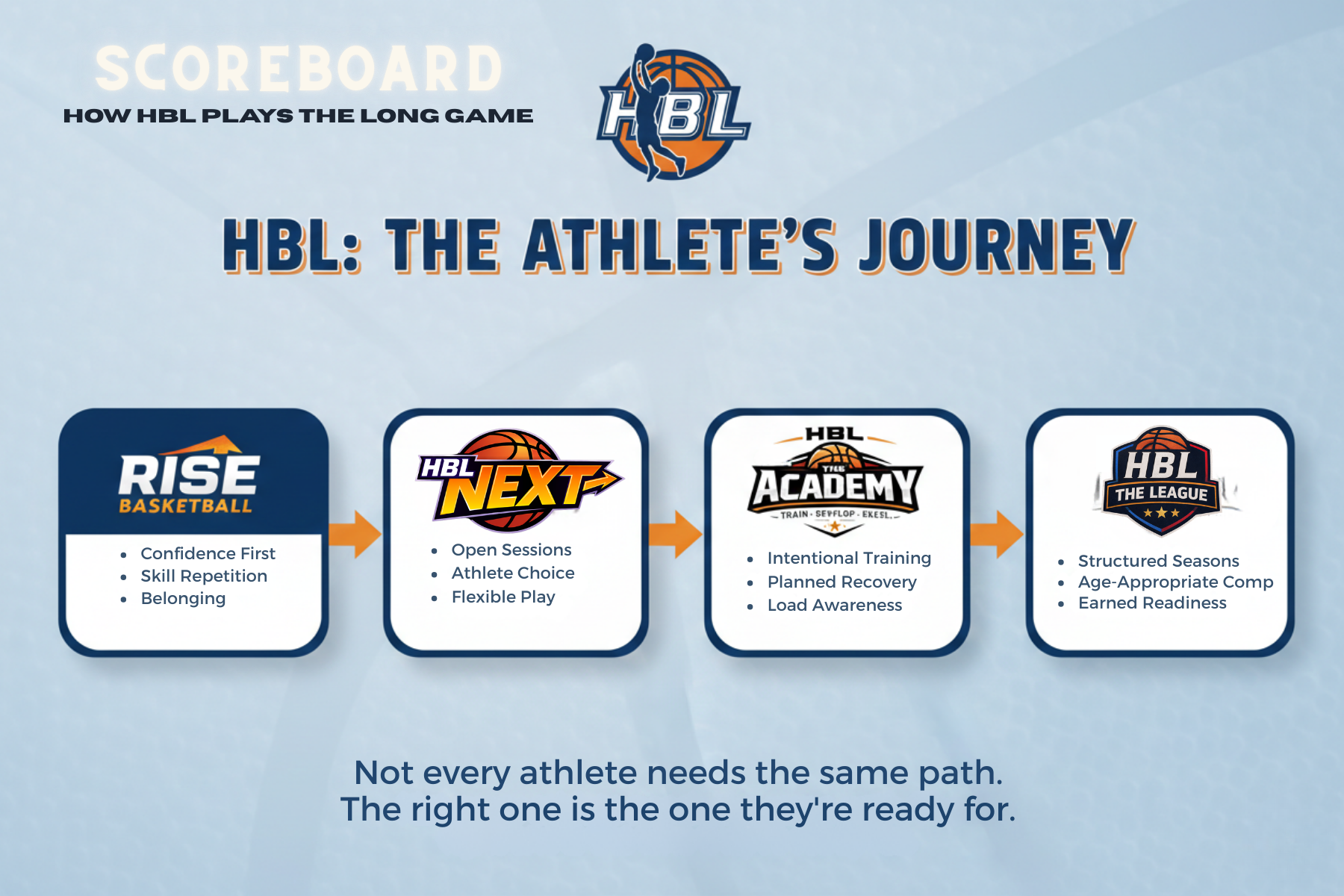
How HBL Plays the Long Game
WHY HBL SHOWS UP HERE
HBL wasn’t built as a single program. It was built as a pathway — one that recognizes kids don’t all arrive ready for the same demands at the same time.
Instead of forcing every athlete into one lane, HBL separates development into environments that match where a child actually is, not where adults want them to be.
That distinction matters most in February.
THE SYSTEM
At its core, HBL exists to reduce unnecessary pressure in youth basketball by giving athletes the right environment at the right moment.
Not faster. Not earlier. Not louder. Just clearer.
February compresses everything:
- Seasons overlap
- Bodies get tired
- Pressure stacks quietly
Different environments allow:
- Rest without guilt
- Growth without comparison
- Progress without panic
HBL’s structure exists to absorb that pressure — not pass it down to kids.
Scoreboard isn’t about who’s winning right now. It’s about who’s still standing when the season gets heavy.
HBL shows up here not because it’s perfect — but because it was built to last.
THE PARTS
RISE — Where Confidence Comes First
- Lower intensity
- Skill repetition without judgment
- Emphasis on belonging, not performance
- A safe entry point for kids who feel behind, unsure, or overwhelmed
NEXT — Where Exploration Stays Flexible
- Open-format sessions
- Controlled capacity
- Athlete choice and autonomy
- Low consequences for rest, absences, or off nights
THE ACADEMY — Where Training Slows Down
- Focused skill work
- Planned recovery
- Load awareness
- No exposure race
HBL: THE LEAGUE — When Competition Makes Sense
- Structured seasons
- Clear expectations
- Age-appropriate competition
- Accountability matched to readiness
The league is not the starting point. It’s a step — taken when the athlete is prepared for it.


IN THE PAINT
Readiness Before Exposure

Giannis Antetokounmpo was not built inside an acceleration machine. He did not grow up in national travel circuits. He was not a middle-school showcase fixture. He was not a viral youth highlight. He played in relative obscurity in Greece.
What he did have was repetition. Daily work. Unstructured games. Local competition. Incremental development.
His exposure came later.
By the time NBA scouts noticed him, his readiness signals were already visible:
- Physical durability
- Motor consistency
- Adaptability under pressure
- Identity separate from spotlight
The exposure did not create those qualities. It revealed them. That distinction matters.
In accelerated systems, visibility often arrives before stability. Athletes are placed on larger stages while mechanics are still forming and identity is still fragile. Giannis’s path unfolded differently. He did not bypass development. He matured within it.
When competitive load increased, it layered onto existing foundation. His body had adapted. His work habits were internalized. His improvement curve was already active.
The global spotlight magnified readiness. It did not manufacture it.
This does not mean every athlete should follow his exact path. He is not a blueprint. He is an example of sequence.
Foundation before exposure. Repetition before scale. Identity before platform.
His rise appears dramatic in hindsight. But it was built in quiet phases.
The lesson is not that elite outcomes require obscurity. It is that readiness determines whether exposure compounds or consumes. Ambition without sequence can create visibility.
Sequence creates durability. Giannis did not accelerate into the spotlight. He entered it prepared. And preparation compounds longer than acceleration.
BUZZER BEATER
The Final Word
March does not require urgency. It requires order. There will always be another team. Another league. Another season. Another opportunity.
What does not repeat is foundation at this age.
The goal is not to reduce ambition. It is to align it.
When expectation accelerates faster than work, pressure compounds. When financial intensity scales with clarity, development compounds. Those are different outcomes.
No parent intends to mis-sequence investment. The distortion happens quietly — inside compression, comparison, and calendar momentum.
Clarity restores pace. You do not need to match the system’s speed to protect your child’s future. You need to match intensity to readiness.
Effort should remain constant. Repetition should remain visible. Load should follow stability. Exposure should follow foundation. That is not conservative. It is disciplined.
If you decide to wait this month — and the work continues — you are not falling behind.
You are protecting sequence. And in systems optimized for speed, clarity is the only real advantage.
RESOURCES
External link

Tap the image to open the drive link.