
April Is the Window
How you navigate it changes everything. A calm editorial guide for families moving through the transition window in youth sports.

Table of Contents
Use the April issue as a guide, not a race. Tap any section to jump.
April Is the Window
How you navigate it changes everything.

The season ends in a way that can look clean from the outside. The final game gets played. The uniforms come off. The gym empties. The schedule disappears.
For a moment, it can feel like things are slowing down. For many families, that feeling does not last very long. Because what shows up after the season is not always rest. It is often a different kind of activity: a message, a flyer, a recommendation, a tryout date, a conversation in the bleachers, a suggestion from another parent, a trainer someone swears by, a team someone says is “the next step.”
The games may be over. The decisions are not.
What shows up after the last game
For parents who are newer to youth sports, April can feel strangely disorienting. Not because nothing is happening. Because too much starts happening at once. One season has ended, but the next phase is already pressing in.
- Open gyms begin.
- Spring and summer teams form.
- Training options multiply.
- Tryout windows appear.
- Exposure language starts showing up.
Other families seem to know exactly where they are headed. That last part matters. Because one of the hardest things about this time of year is not just the number of options. It is the feeling that everyone else already understands how this works.
Why April feels louder than it looks
April is loud in a particular way. Not loud like a championship game. Not loud like a packed gym. Loud like decision-making. Loud like uncertainty. Loud like trying to figure out whether this is the moment to move, pause, add, wait, shift, or commit.
And for families without a long history in sports, that noise can feel like information. But those are not always the same thing. A lot of what reaches families in this window is not guidance. It is availability.
That is the real tension of this month: more options, less direction. The problem is what happens when options expand faster than understanding. When movement starts to feel smarter than patience. When urgency starts to feel smarter than sequence.
This is the real beginning of the transition window
The transition window is not just the period after the season. It is the moment where one structure disappears before the next one has been clearly explained. The season provided rhythm. Practice days. Game days. Team structure. A known calendar. A defined environment. When that ends, the athlete does not just lose games. The family loses the rhythm that made decision-making easier.
And almost immediately, a new set of possibilities arrives. But those possibilities do not arrive in order. They arrive all at once. That is why this issue exists: to slow this moment down enough to actually see it.
Before the system can be explained, it has to be felt.

What Comes Next?
The season ended. The decisions didn’t.
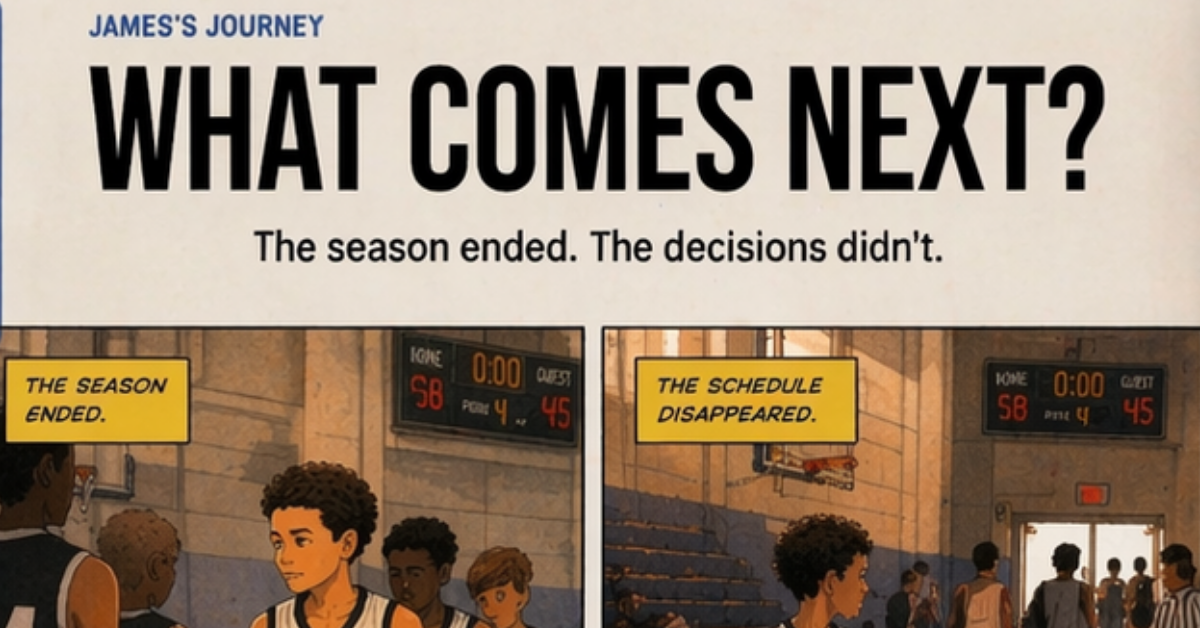
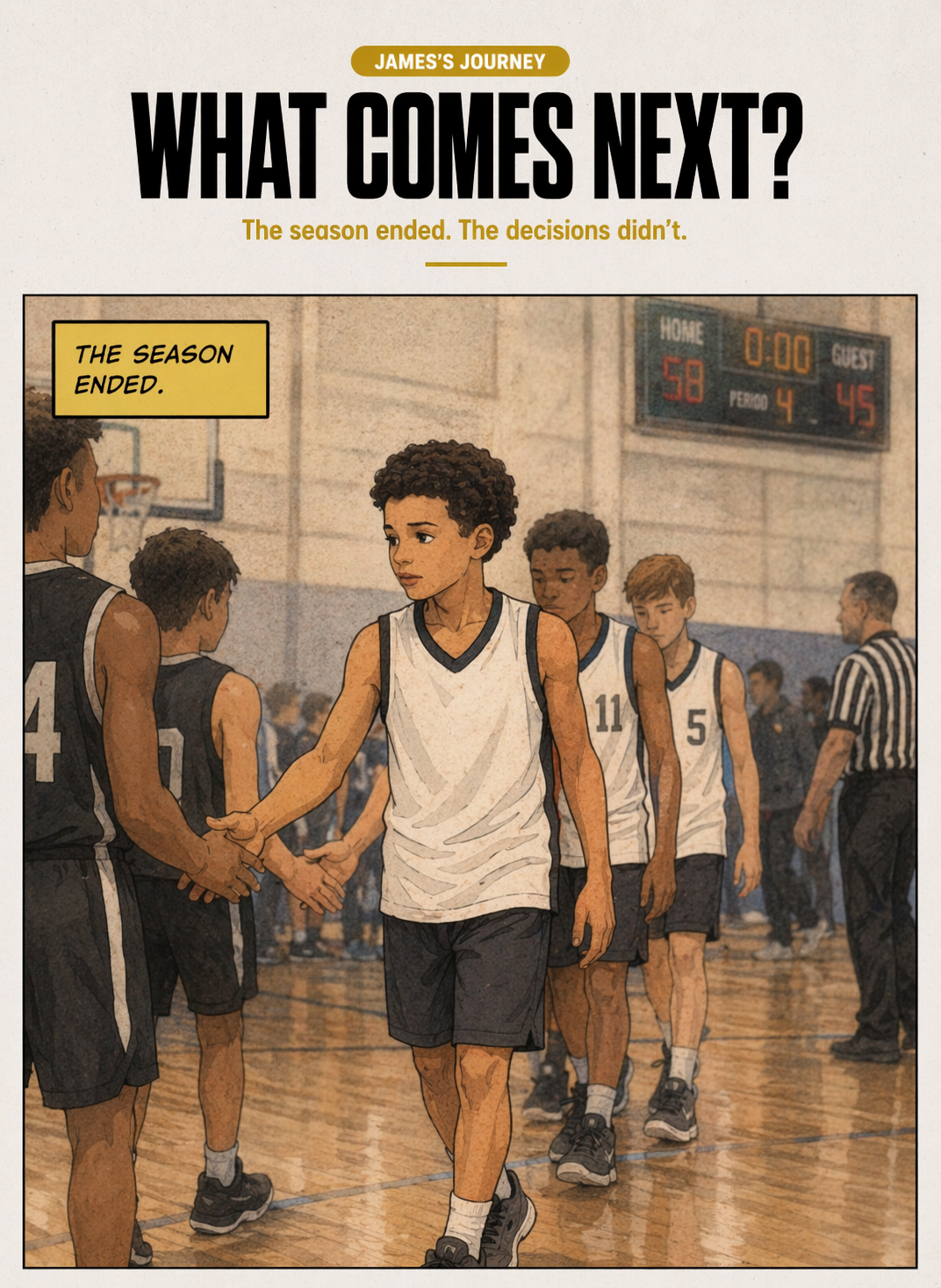
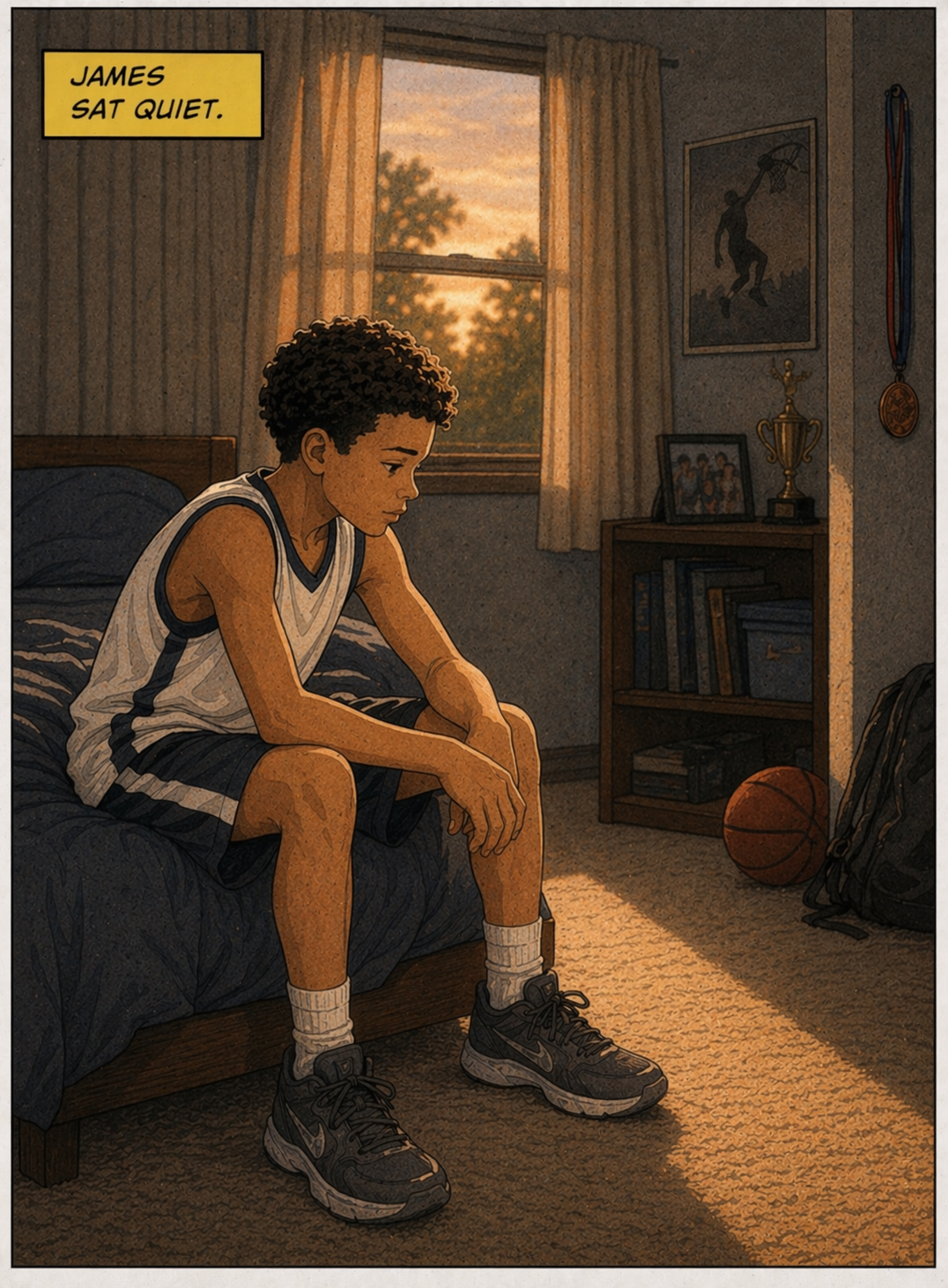
The season ended the way seasons end for a lot of families. A handshake line. A scoreboard at zero. A gym starting to empty. Then the schedule disappeared. Not forever. Just suddenly.
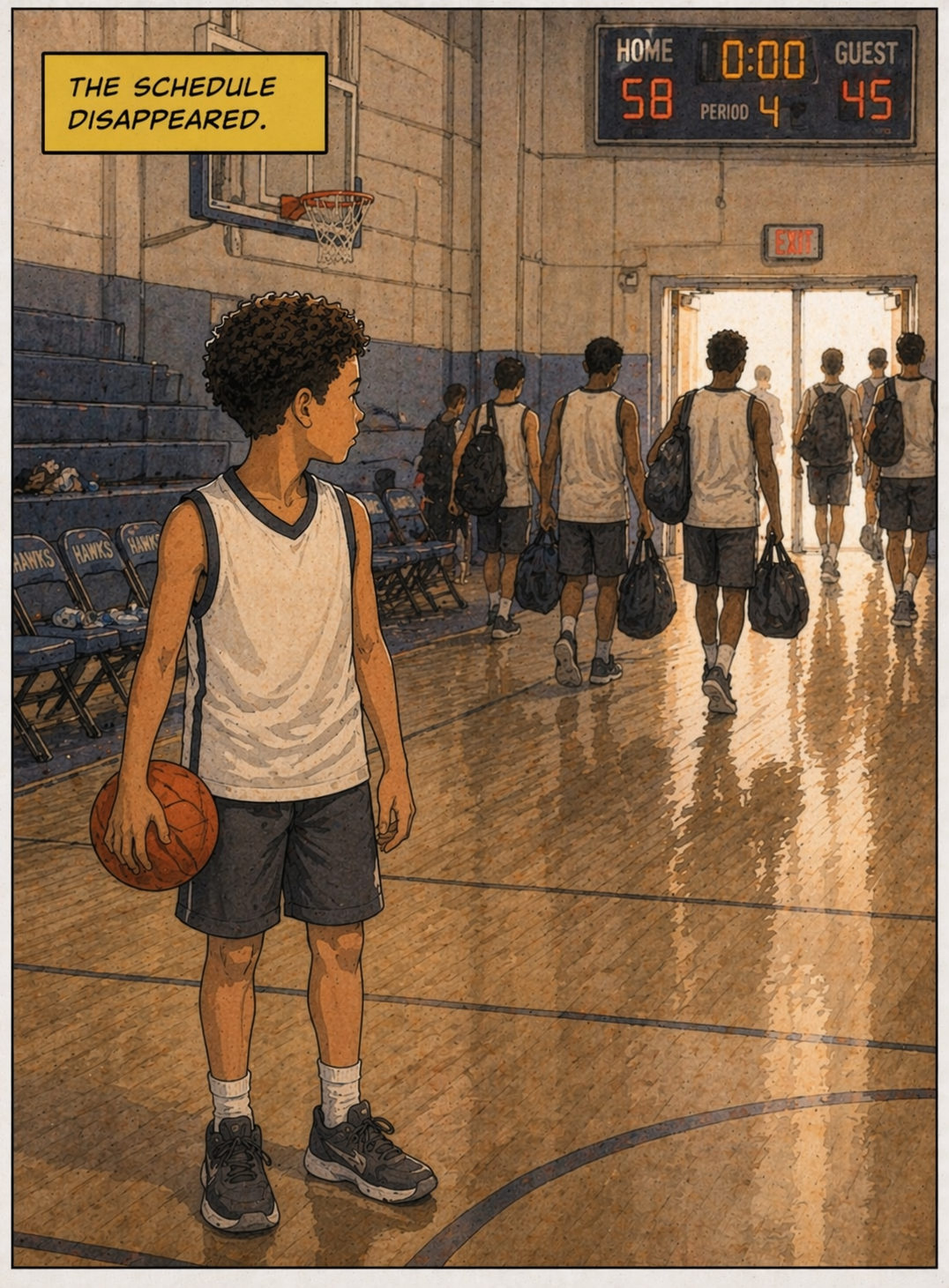
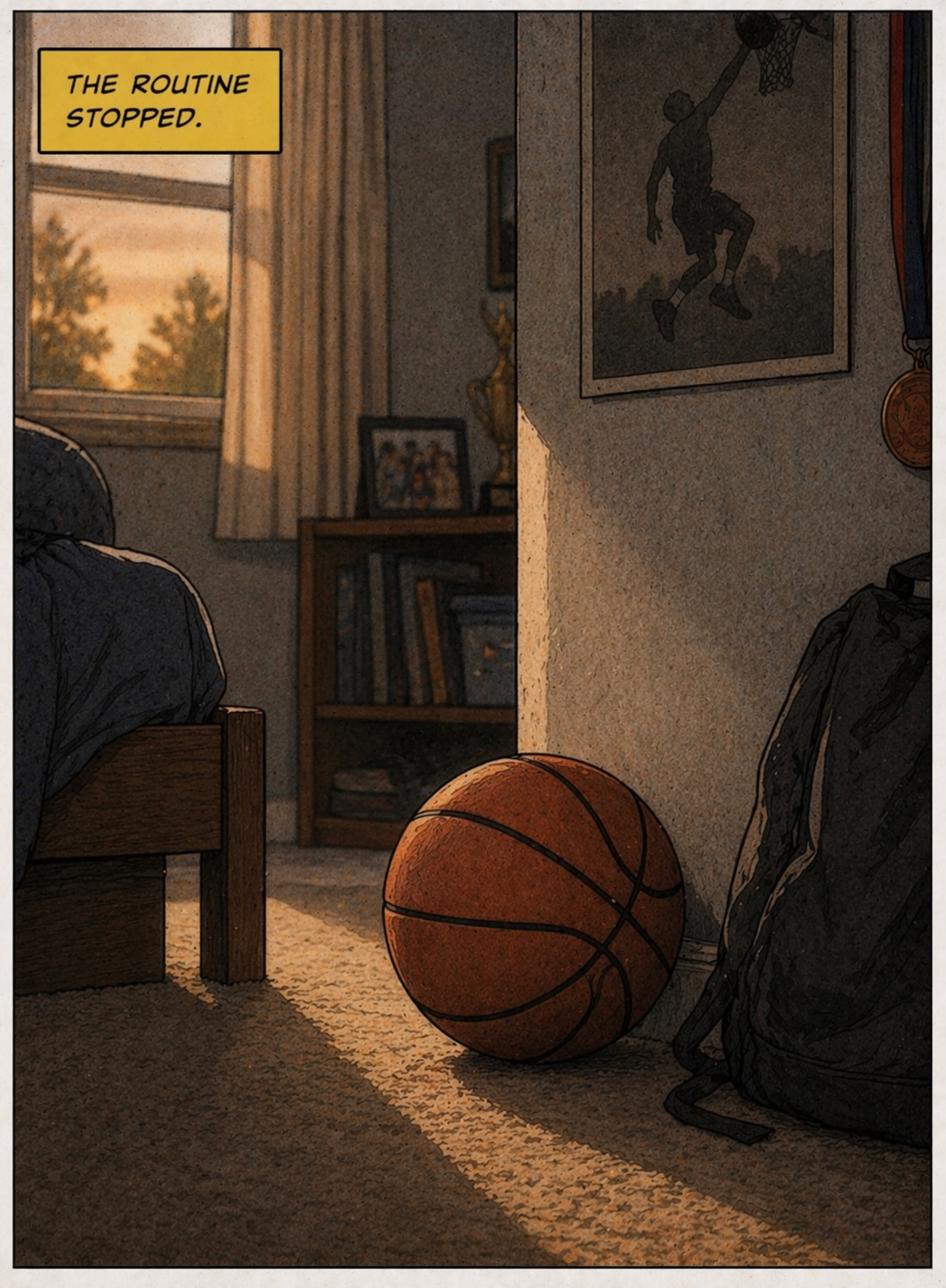
The practices stopped. The game days stopped. The rhythm that had carried the family from week to week stopped. And for a moment, the house got quiet. That kind of quiet can be misleading. It can look like rest. Sometimes it is. Sometimes it is the space right before pressure changes form.
Because for many families, the end of the season is not the end of decision-making. It is the start of a different kind.
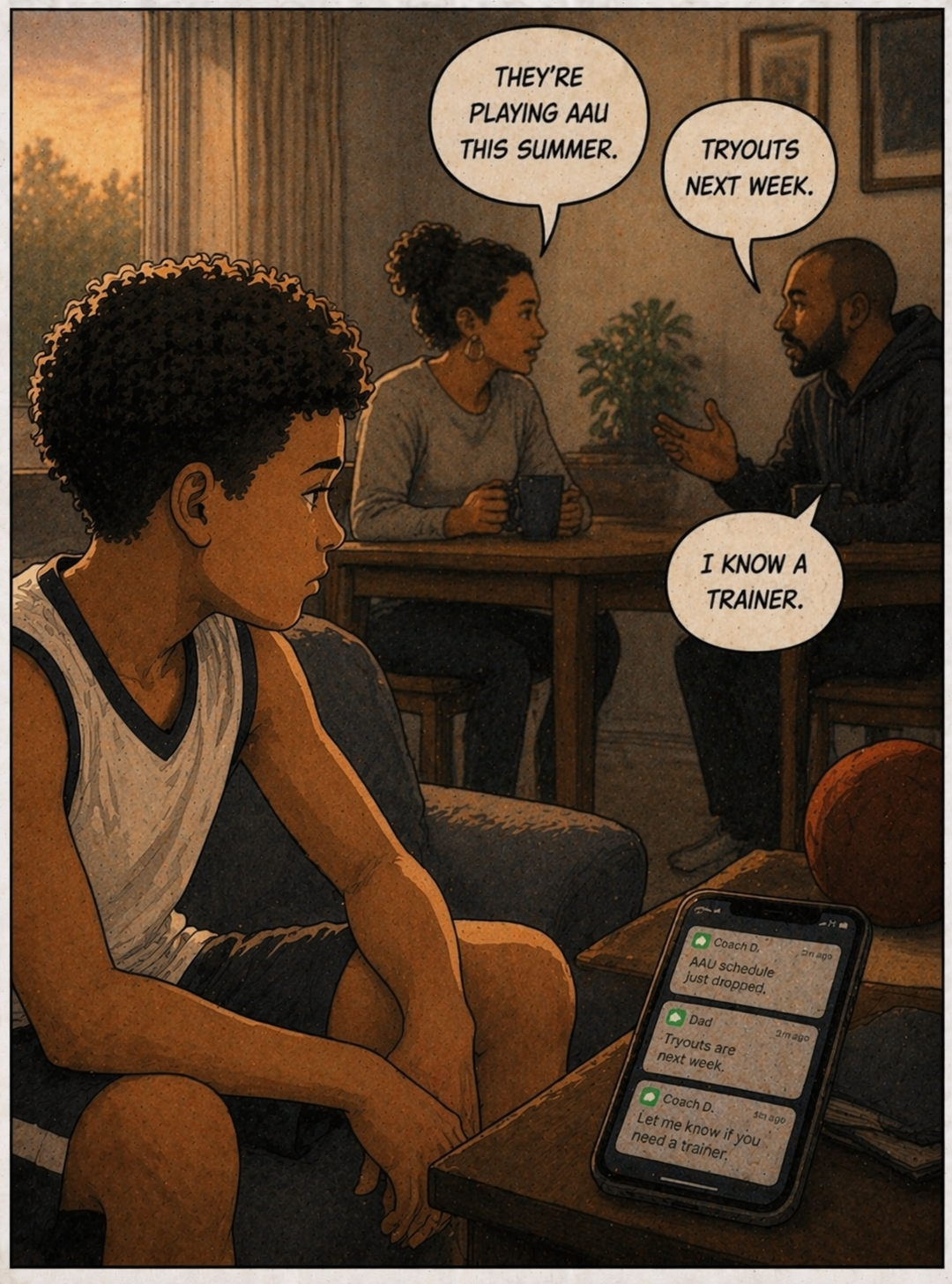
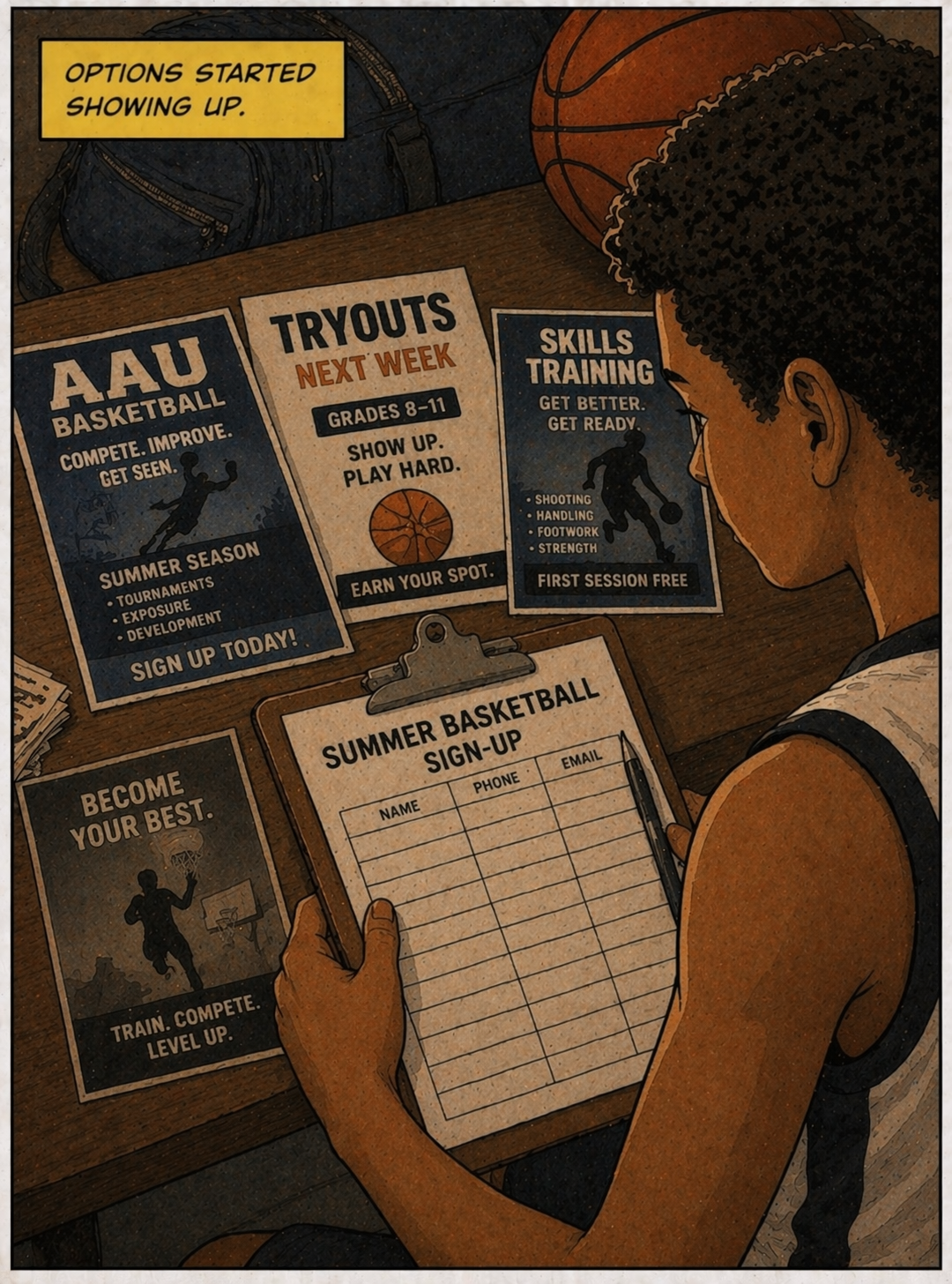
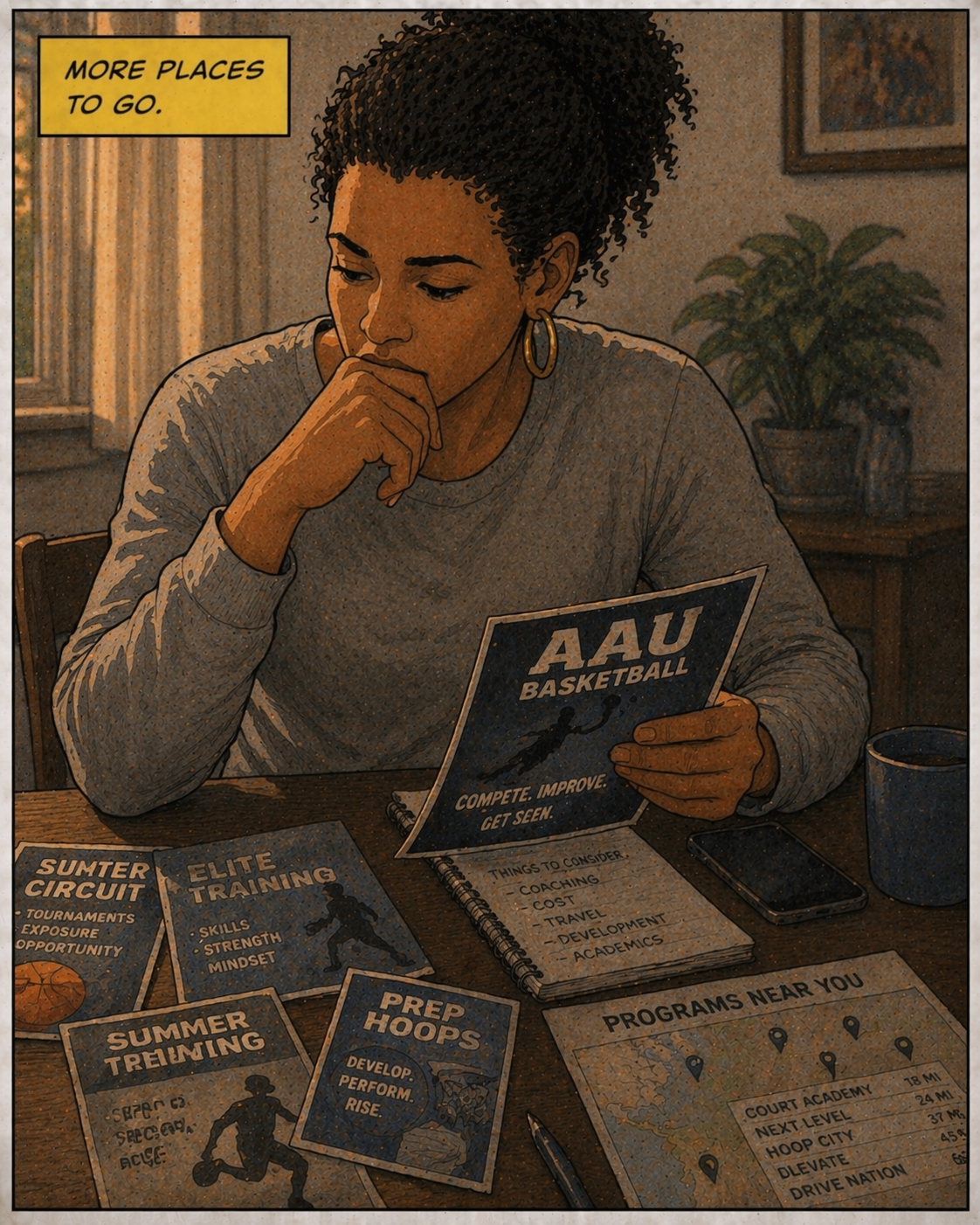

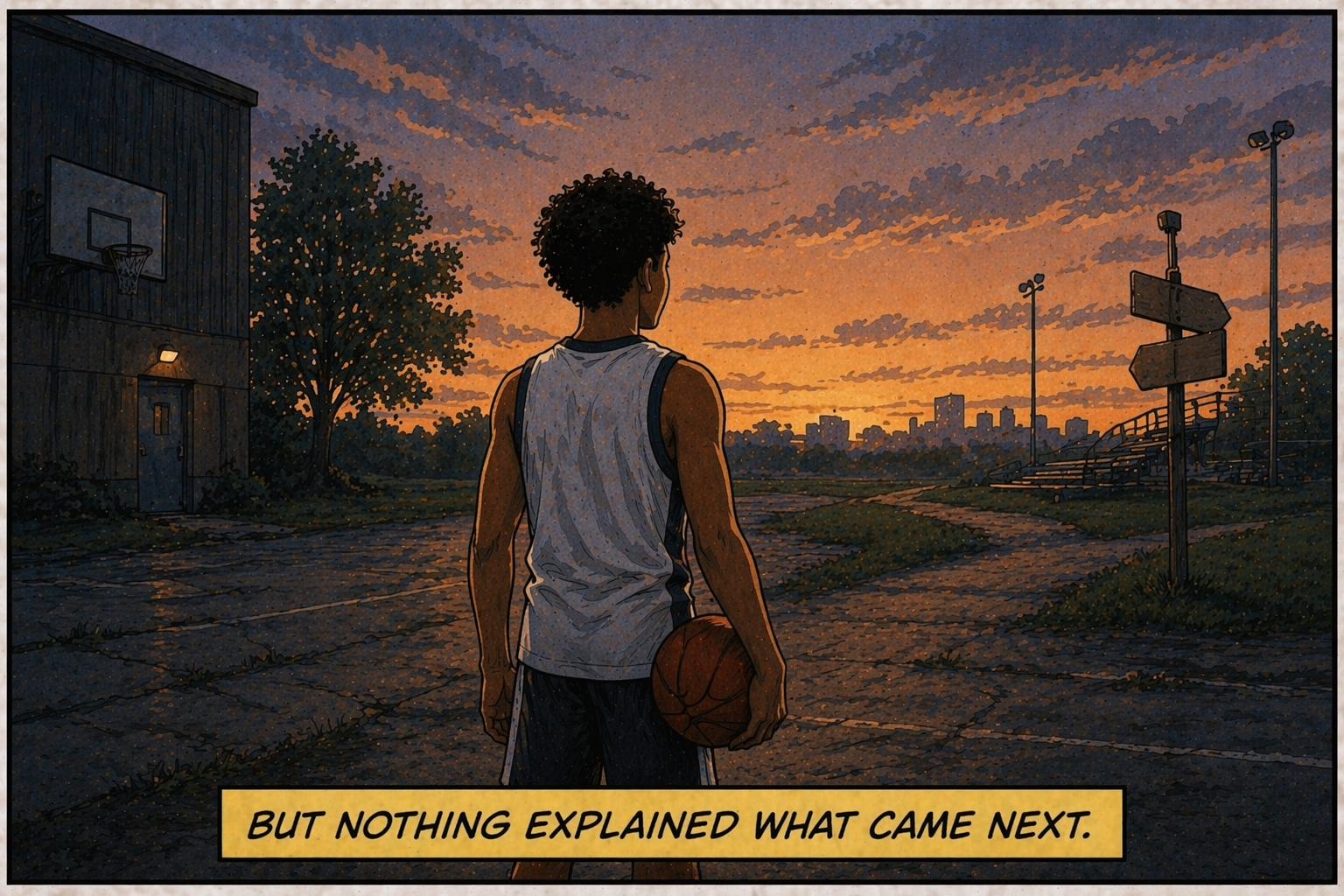
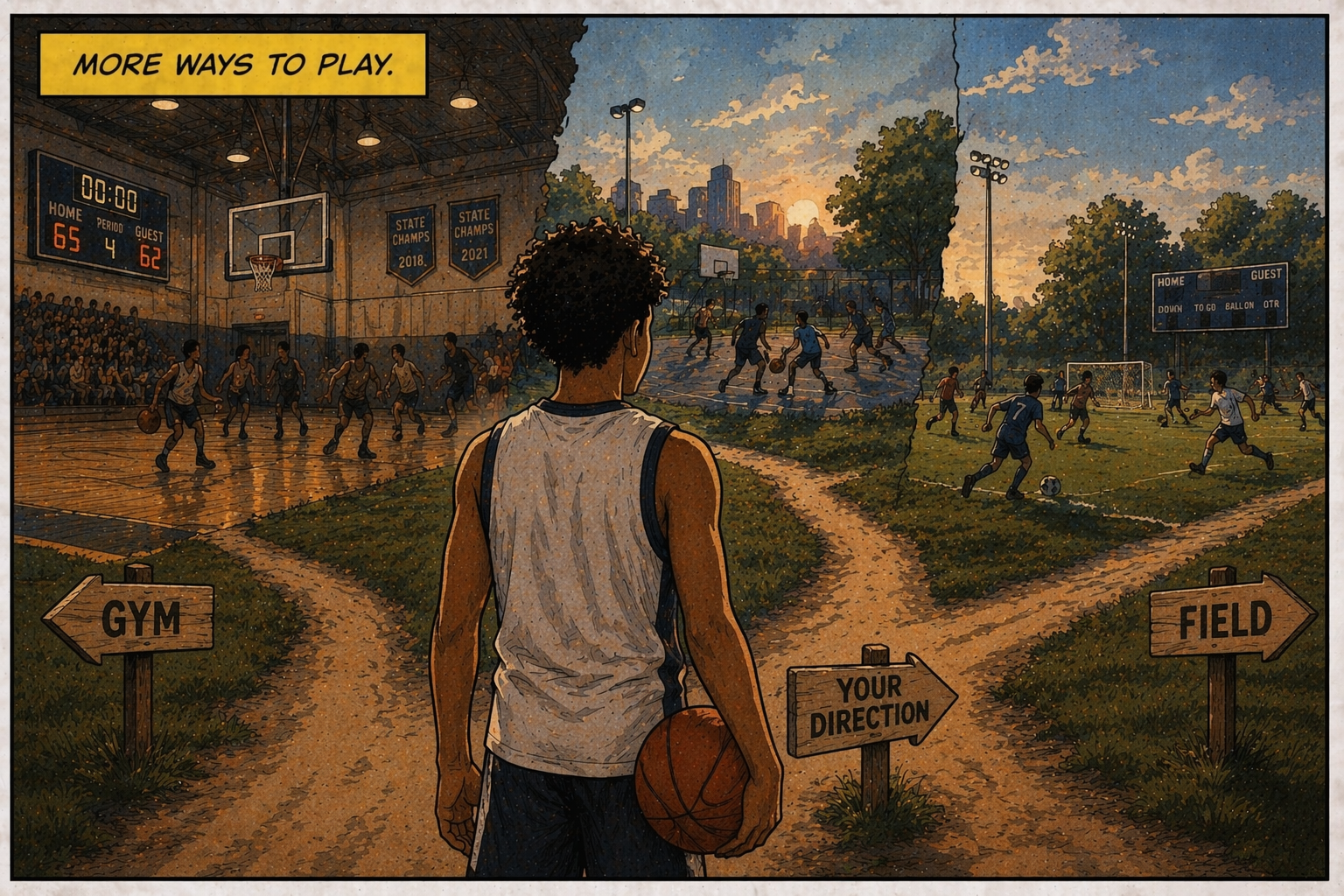
That is the line the whole section turns on. Because that is the experience many families are actually having. Not that nothing exists. Not that no one is offering anything. But that the moment is full of motion without a shared explanation.
The season ends. The calendar opens. The options appear. The conversations begin. But no one clearly says: This is where you are. This is what this moment is for. This is what actually fits now. This is what can wait.
What feels personal in the home often begins in the structure around it.
Why the Path Feels Unclear
The system produces opportunities. It does not provide navigation.

The system isn’t designed to guide you
One of the hardest things for parents to understand in youth sports is that the confusion they feel is often not personal. It is structural. What parents are feeling is not a lack of effort or intelligence. It is the reality of moving through environments that were never actually designed to connect.
The system is not designed to guide families from one stage to the next. It is designed to operate in separate parts. Each part has a function. Each part can matter. But none of them, by themselves, is responsible for giving a family the full pathway.
Each environment has a job. None owns the pathway.
Youth sports often looks more unified from the outside than it really is. A parent sees rec leagues, school teams, trainers, open gyms, AAU programs, travel teams, spring sports, local camps. It can look like these things are all part of one connected system. They are not.
A rec league is not trying to be a long-term development map. A trainer is not responsible for the total shape of a child’s athletic year. A team is not always built to interpret what came before it. A school program is not necessarily designed to connect the athlete back to everything happening outside the school calendar.
Rec, training, teams, and schools don’t actually connect
That means the family is often left to answer difficult translation questions on its own: How does rec connect to training? How does training connect to team play? How does one season connect to the next? How do we know whether this next option builds on the last one—or just interrupts it?
What fills the gap when no structure exists
When the season ends and no shared structure explains what comes next, something fills that opening. Usually, it is informal guidance: word of mouth, other parents, group chats, text messages, flyers, DMs, trainer recommendations, social media posts, tryout announcements, visible movement from other families.
None of those sources is automatically bad. But they are not the same as a pathway. They are inputs. And inputs are not neutral. Each one carries its own priorities: urgency, availability, promotion, fear of missing out, personal experience, success bias, local culture, incomplete information.
Why families end up stitching together the path themselves
Families take one recommendation from a parent, one trainer suggestion, one team invite, one guess about readiness, one emotional read on the child, one scheduling decision, one financial calculation—and stitch together a pathway that feels as coherent as possible. That is understandable. It is also exhausting.
Understanding fragmentation is the first step. Once it becomes visible, the family can stop treating the month like a test of speed and begin asking better questions about what each environment is actually built to do.
The system produces opportunities. It does not provide navigation.

The Big Idea Shaping Every Decision
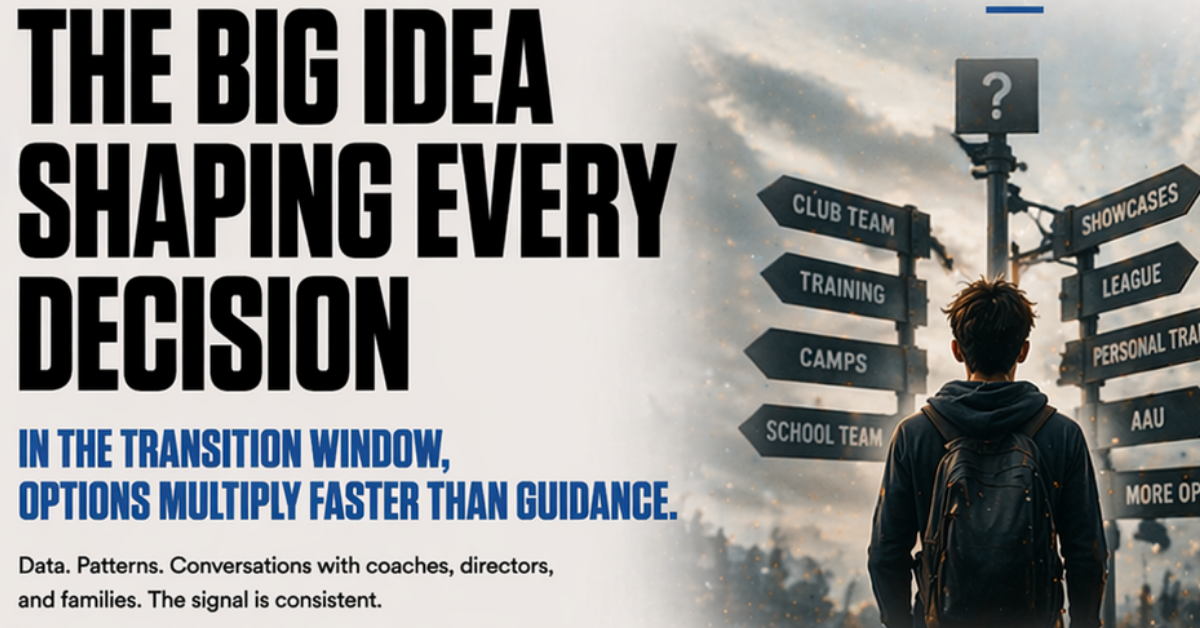
More options do not automatically create better development.
What the evidence keeps showing
One of the most persistent myths in youth sports is that more opportunity naturally leads to more progress. It sounds reasonable. More teams. More training. More competition. More exposure. More environments to learn in. But when long-range development models look at how athletes actually improve over time, the pattern is much less romantic and much more useful.
Improvement does not come from access alone. It comes from the right kind of work arriving at the right time, in the right sequence, with enough consistency for the body and mind to actually absorb it.
Why access and development are not the same thing
Access answers one question: What is available? Development answers a different one: What actually helps right now? Those are not the same question.
A child can have more access than ever and still be moving through those opportunities in a way that does not support long-term growth. The presence of a path does not automatically mean it is the right path. The presence of movement does not automatically mean the athlete is developing.
Why sequencing matters more than volume
Volume is easy to see. Sequencing is harder to see. Sequencing asks a less dramatic question: not how much are we doing, but what comes first, and why? An athlete can be working very hard in the wrong order. A family can be investing heavily in layers that do not connect.
The clarity filter
- What is still unstable? What part of the athlete still needs more repetition?
- What is already working? What is becoming more reliable?
- What would this next environment replace? Every yes removes time, energy, recovery, or attention.
- Does this option connect—or just add?
- What happens if we wait? Not forever. Just long enough to see more clearly.
The next step is not the next option. It is the next need.

Why This Guide Exists
This is not about doing less. It’s about understanding what fits now.

What this guide is not
This guide is not here to shame parents for caring. It is not here to criticize families for wanting more for their children. It is not here to act like effort is the problem. Most families are already trying very hard to do right by their children. That effort is real.
The issue is what happens when effort has to operate inside a system that often gives families more options than explanation.
We are not anti-rec
Rec leagues matter because access matters. For many families, rec is where the process begins: first structure, first games, first team setting, first rhythm, first visible growth. In many cases, rec is exactly where a child needs to be.
We are not anti-training
Training has value. Real value. This guide is not suspicious of training because it exists. It is cautious only when training becomes automatic—when the question changes from what does this athlete need to who should we hire next.
We are not anti-ambition
Wanting more for your child is not the problem. This guide is not asking families to become less ambitious. It is asking them to become more precise. Ambition without sequence becomes pressure. Ambition with structure becomes patience with a purpose.
Who this guide is for
This guide is for parents in the middle of the decision—not outside of it. It is for the parent who cares deeply and still feels unsure. The parent who wants to do right by their child, but does not always know what this month is asking for.
In the transition window, the family does not need more pressure. It needs a better frame.

A Better Question Changes the Decision
Stop asking what’s next. Start asking what’s needed.
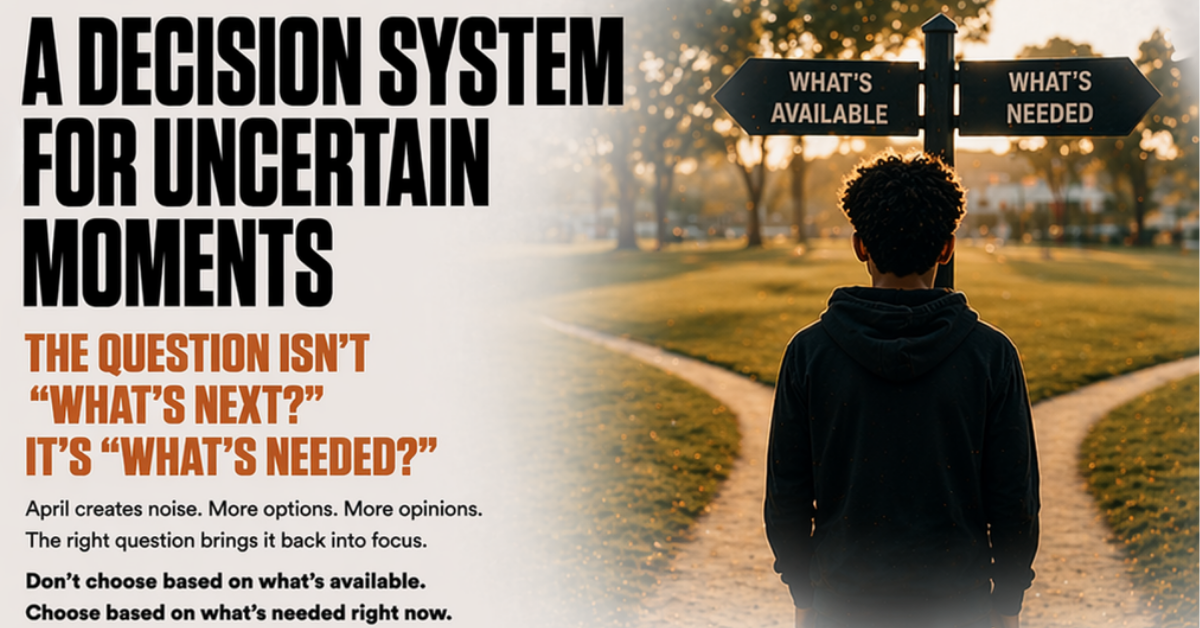
A lot of youth sports decisions begin with a question that sounds responsible: What’s next? It sounds engaged. It sounds proactive. But the problem is that the question is built around motion.
Once “What’s next?” becomes the main frame, the family starts scanning for availability, speed, openings, invitations, and visible opportunities. That can feel productive. But it can also pull the family away from the more important question hiding underneath the moment.
Why “What’s next?” creates pressure
“What’s next?” narrows attention toward whatever is already moving. It makes speed feel intelligent. It creates the impression that good parenting means staying ahead of the calendar. But in the transition window, speed often fills the role that understanding has not yet earned.
What “What’s needed?” reveals instead
When a family replaces “What’s next?” with “What’s needed?”, the entire shape of the decision changes. Now the family is reading the athlete. That question turns attention toward what is still unstable, what is improving, what is missing, what is working, what needs more time, what needs a different environment, and what needs rest.
The four need categories
- Stabilize — do not interrupt what is still becoming solid.
- Vary — change the environment without turning the change into escalation.
- Refine — add narrowly, not broadly.
- Recover — rest is not the opposite of development. Sometimes it is what protects it.
Stop asking what’s next. Start asking what’s needed.
Pause on Purpose
The in-between is part of the process too.

The season ends, and something unusual happens. The calendar opens up. There is no practice tonight. No game this weekend. No immediate structure telling the family where to be and when to be there.
For many parents, that kind of silence does not feel peaceful at first. It feels suspicious. It can feel like something is missing. Like momentum is slipping. Like other families are already moving while yours is standing still.
Why this moment doesn’t need to be filled immediately
One of the most helpful truths in youth sports is also one of the hardest to trust: a quiet week is not a crisis. A slower stretch is not neglect. An unscheduled moment is not proof that a child is falling behind.
Sometimes the most useful thing a family can do after a season ends is not to accelerate. It is to notice what the season actually produced, what is more stable now than it was before, what still looks fragile, and what the athlete feels like when the pressure of the schedule is removed.
The halftime check-in
- What do we see? Observation first.
- What matters most? Not every signal matters equally.
- What can wait? This question protects the family from stacking.
- What do we need space for? Recovery, repetition, emotional reset, lower pressure, or a little more time.
Perspective creates actual control. Speed only creates the feeling of control.
Four Paths. One Decision That Fits This Moment.
Not every moment needs more. Sometimes it needs something different.

The danger in April is usually not one terrible option. It is several decent options arriving at the same time, then getting stacked together before anyone asks whether they actually belong together.
This is why the transition window needs something more than instinct. It needs structure.
Path 1: Stay
Remain in the current layer long enough for the work already underway to settle. Staying is often the right path when confidence is still becoming stable, fundamentals are showing up but not consistently, and the current environment is helping more than it is hurting.
Path 2: Shift
Change the environment because the athlete now needs a different kind of stimulus. Sometimes the right move is not up. It is over. A different sport. A different role. A different kind of movement.
Path 3: Add
Introduce a focused layer that serves a clear purpose. This is where training often belongs—when the need is specific and visible, not just assumed.
Path 4: Pause
Pause is the path most families resist and the one many athletes need more than anyone wants to admit. It is often the condition that lets development settle.
One path is not small thinking. It is clear thinking.
The Work You Put In Now—And What It Costs
Every extra step has a cost. Not all of them show up right away.

Once the season ends, adding more can start to feel like the responsible thing to do. A new team. A few extra sessions. A trainer. Open gym. Another set of reps. A weekend run somewhere else. Each addition can sound reasonable by itself.
That is what makes this part of the transition window so difficult. Families are rarely choosing between something obviously wise and something obviously reckless. More often, they are choosing between several things that all sound helpful in isolation.
The physical cost
Every new layer asks for time, energy, recovery, attention, and emotional space. Physical cost often shows up earlier and quieter than obvious injury: heaviness in movement, slower recovery, soreness that does not really clear, mechanics that become less stable under fatigue.
The mental cost
Children absorb the emotional atmosphere around decisions. The mental cost can show up as shorter patience, flatter energy, less enthusiasm, emotional withdrawal, lower willingness to be corrected, or less joy in the same activity that used to feel exciting.
The developmental cost
Development depends on the athlete being able to settle what they are learning. Stacking interrupts that. The athlete keeps moving, but the work does not always consolidate.
The time cost
Every extra step costs more than the hour itself. It costs transportation, waiting, setup, recovery, schedule compression, lost family time, lost free play, lost sleep, and lost room for life outside the sport.
Every extra step has a cost. Not all of them show up right away.

The Signals That Show You’re Aligned
Alignment shows up before results do.
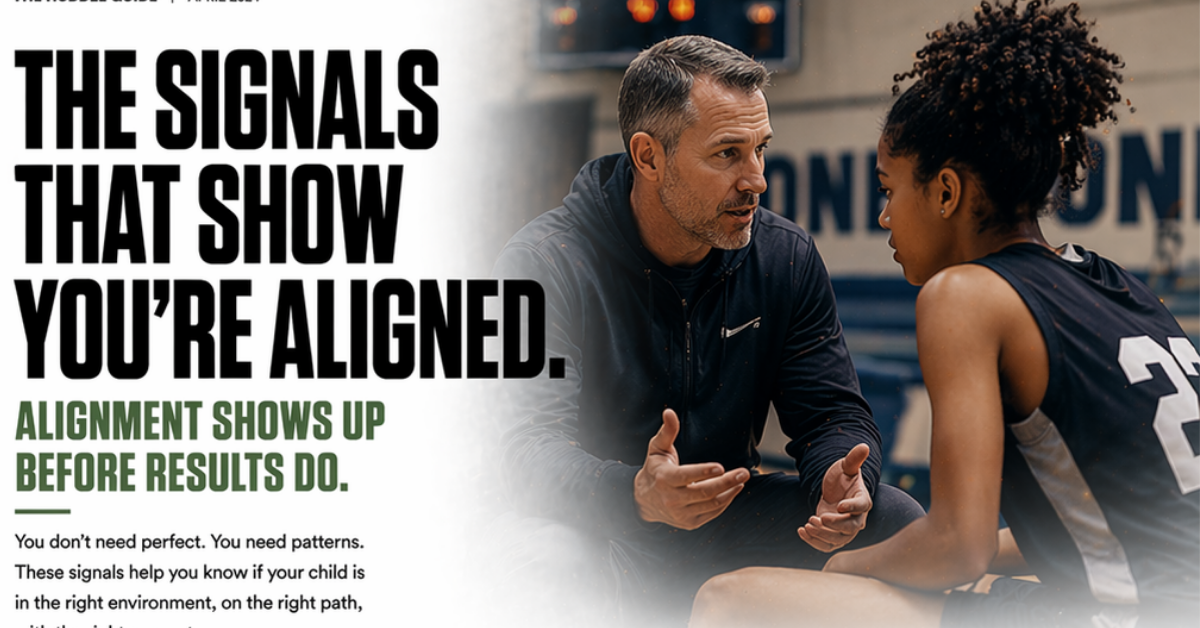
One of the hardest things for parents to judge in youth sports is whether the process is actually working. Not whether the child had a good day. Not whether they looked impressive once. Whether the overall direction is right.
Alignment usually does not show up first as dramatic success. It shows up first as pattern.
Signal 1: Consistency
Consistency means effort looks more stable, energy is more predictable, habits are starting to repeat, and what shows up once begins to show up again.
Signal 2: Visible Growth
Visible growth means the things the athlete has been working on begin to appear more naturally under real conditions. The skill starts transferring.
Signal 3: Environment
An aligned environment is one that helps the athlete grow in a way the family can actually observe over time. It feels challenging without constantly being destabilizing.
Signal 4: Load
Load is how much the athlete is carrying physically, emotionally, mentally, socially, and behaviorally. One athlete may be managing it well. Another may be quietly overloaded.
Signal 5: Direction
Direction means the family can explain why they are choosing what they are choosing. The next step builds on the previous one. The process has shape.
Alignment isn’t something you feel. It’s something you can see.
Clarity Changes the Path
Kobe Bryant’s early struggle is what made the lesson visible.

When people look back at Kobe Bryant, they usually look backward from greatness. But that is not the most useful place for parents to look in an issue like this. April is not about greatness after the fact. It is about what a family does when the path does not look clear yet.
The moment did not look like the future. It looked uncertain. Young. Uneven. Publicly exposed.
What early uncertainty actually reveals
Uncertainty is not always a sign that the path is wrong. Sometimes it is the clearest signal that the athlete has reached the edge of what still needs to be built.
Public failure is still information
A bad public moment is still information. It can reveal what is not stable yet, what breaks under pressure, what the athlete has not yet fully owned, and what kind of work still needs to deepen.
Why his response mattered more than the moment
The useful response was not escape. It was return. Return to the gym. Return to the details. Return to the work that the moment exposed as unfinished.
Not every unclear moment needs a bigger answer. Some need a better one.

Choose Direction, Not Speed
Clarity is the advantage.

By the time a family reaches the end of this issue, the pattern should be visible. April is not difficult because nothing is available. It is difficult because too much becomes available before the path is clearly explained.
That is why clarity matters more than speed. Speed can create relief without creating alignment. A quick decision can quiet uncertainty for a while. A full calendar can make a family feel organized again. But none of those things guarantees that the choice actually fits.
The transition window does not demand movement
It only feels that way. Once families stop treating every opening like a command, they regain something essential: choice. Real choice.
It demands direction
Direction is different from activity. A family can be active without direction. Busy without direction. Committed without direction. Direction means the family can explain why they are choosing what they are choosing.
This Month’s Check-In
A simple family checkpoint for the transition window.

Observe: What’s real right now?
Before a family chooses anything in April, they need one thing first: a clearer read of the moment they are already in. The question is not what are other people doing. The question is what is actually true for this child right now.
Discuss: What matters most?
Parents do not need children to become full architects of the family sports plan. But they do need to hear them clearly enough that the next step is not built entirely from projection.
Check: What’s aligned?
Alignment means the next step fits the athlete, the timing, the current needs, the family’s actual capacity, and the process already underway.
Decide: What fits now?
What fits now may be staying where the current work is still helping, shifting into a different environment that supports variation, adding one targeted layer that solves a visible need, or pausing long enough for recovery and clarity.
This month, we will…
- This month, we will stay where confidence is growing.
- This month, we will not add another commitment.
- This month, we will give recovery more room.
- This month, we will ask better questions before saying yes.
- This month, we will choose one path and let it work.
